


China Top 10 Aluminum Furnace Suppliers for Global Buyers

China Top 10 aluminum furnace Suppliers for Global Buyers

Choosing an aluminum furnace is a production decision, not merely a purchasing exercise. The right system must match alloy, charge material, melting volume, fuel source, and operating schedule. A furnace standing beside a dusty casting line faces different demands from one serving a modern extrusion plant.

Dr. John C. L. Hui, a respected researcher in aluminum processing, states, “A furnace is only as good as its control of temperature, atmosphere, and material flow.” This principle remains practical for international buyers. Stable temperature supports consistent melt quality. Controlled atmosphere reduces oxidation. Efficient material flow protects both output and energy performance.

This guide introduces ten leading Chinese aluminum furnace suppliers for global buyers. It considers furnace design, heating methods, temperature control, automation, energy use, maintenance support, and export experience. It also examines less visible details, including refractory durability, burner replacement, spare-part access, and commissioning assistance.

Not every supplier fits every factory. That is the uncomfortable part. A low purchase price may hide higher fuel consumption or slower technical support. A sophisticated furnace may exceed the needs of a small foundry. Buyers should request test data, reference projects, inspection records, and clear warranty terms before making a decision.

Supplier rankings are not permanent. Technologies change. Market evidence can be incomplete. Therefore, this overview should support due diligence, not replace it. The strongest choice is the aluminum furnace that performs reliably under your actual alloy, production volume, and workplace conditions.
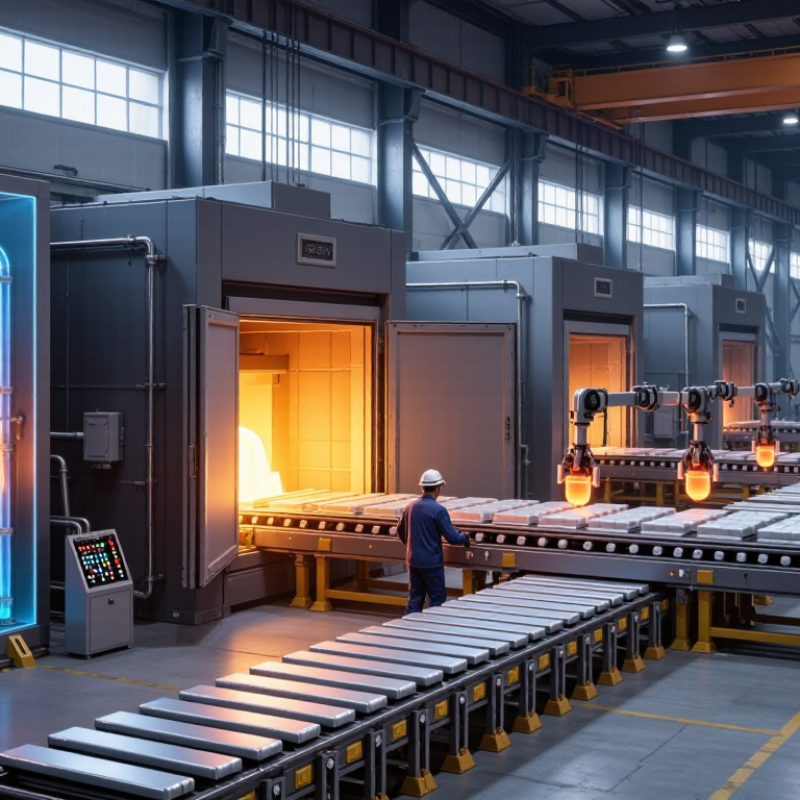
China Top 10 Aluminum Furnace Suppliers for Global Buyers

Aluminum Furnace Industry Overview in China

China’s aluminum furnace industry is expanding alongside its large metal-processing base. The International Aluminium Institute reported that China produced about 41.5 million tonnes of primary aluminum in 2023, nearly 59% of global output. This scale supports a broad furnace supply chain, including melting, holding, heat-treatment, and scrap-recycling equipment. Demand is strongest in die casting, automotive components, construction profiles, and precision manufacturing.

A practical furnace evaluation starts at the shop floor. Operators check melt temperature, furnace lining wear, fuel consumption, and metal loss after each batch. Electric, gas-fired, regenerative, and induction systems serve different production conditions. The China Nonferrous Metals Industry Association has repeatedly highlighted energy efficiency and recycling as major industry priorities. For global buyers, useful specifications include energy use per tonne, temperature uniformity, automatic control accuracy, exhaust treatment, and refractory replacement time.

The figures do not tell everything. A furnace with lower quoted energy use may perform poorly under unstable power or mixed scrap quality. Site visits matter. Buyers should request trial records, maintenance logs, and measured melting cycles rather than relying only on brochures. China’s supplier base is technically capable, but quality consistency can vary between projects. Independent testing and clear acceptance standards remain necessary.
Key Criteria for Evaluating Chinese Furnace Suppliers

Selecting among China’s top aluminum furnace suppliers requires more than comparing quoted prices. Experienced buyers should examine furnace capacity, heating method, temperature uniformity, energy consumption, and control accuracy. Request test reports with actual measurement points, not only brochure figures. A reliable supplier can explain how insulation, burners, heating elements, and refractory materials affect service life.

Technical evidence matters. Ask for material certificates, wiring diagrams, inspection records, and a clear factory acceptance test plan. Check whether engineers have handled similar aluminum alloys, production volumes, and loading patterns. Site audits can reveal practical details, such as cable protection, workshop cleanliness, spare-parts storage, and calibration routines. Small details often predict larger problems.

Supplier reliability also depends on communication after delivery. Confirm installation support, operator training, response times, warranty limits, and spare-parts availability in writing. Review export experience and documentation carefully. A polished factory tour can still mislead. I would not approve a supplier without testing temperature stability under a realistic load. This step may delay purchasing, but it exposes weak designs early. Cost comparisons should include energy use, maintenance, downtime, and refractory replacement. The cheapest quotation is rarely the lowest operating cost. Some evaluations remain uncertain because production data is incomplete. That uncertainty should be recorded, not hidden.

Key Criteria for Evaluating Chinese Aluminum Furnace Suppliers

This procurement evaluation framework assigns practical weighting to the main factors global buyers typically review when assessing aluminum furnace suppliers. The percentages represent a structured due-diligence model rather than supplier rankings or company-specific performance data.

China’s Top 10 Aluminum Furnace Suppliers

China’s Top 10 Aluminum Furnace Suppliers should be assessed through measurable engineering evidence, not catalogue size. The International Aluminium Institute reported that China produced about 41.5 million tonnes of primary aluminium in 2023. This scale creates strong demand for melting, holding, heat-treatment, and recycling furnaces. It also raises expectations for stable temperature control, safe charging, and lower fuel consumption.

A practical supplier review should compare furnace capacity, alloy range, thermal efficiency, emission controls, and service response.

The International Energy Agency identifies energy efficiency as a major lever for reducing industrial emissions. The U.S. Department of Energy also notes that industrial furnaces lose heat through exhaust, walls, and openings.

Buyers should request measured fuel use per tonne, temperature-uniformity maps, refractory specifications, and comparable foundry references. Details matter. A door seal can affect energy bills and oxide formation.

The strongest ten suppliers usually provide simulation, factory testing, installation training, and spare-part planning.

ISO 9001 certification supports process reliability, but it does not prove furnace performance. Ask for recent acceptance records. No ranking is perfect. Some suppliers publish efficiency figures without defining alloy, batch size, or operating temperature. That weakness deserves scrutiny.

Buyers should also examine warranty exclusions, control-system documentation, and local maintenance capability. A cheaper quotation may look attractive, yet delayed commissioning can cost more than the original saving.

Supplier Comparison by Technology, Capacity, and Services

China Top 10 Aluminum Furnace Suppliers for Global Buyers

Choosing among China’s top aluminum furnace suppliers requires more than comparing prices. Technology, capacity, and service determine long-term operating value. The International Aluminium Institute reports that recycled aluminum uses roughly 5% of the energy required for primary aluminum production. Therefore, buyers should examine melting efficiency, heat recovery, burner control, and metal-loss rates.

Supplier capacity must match the plant’s real production rhythm. Compare rated output in tonnes per hour, batch size, furnace volume, and delivery time. A large furnace may look impressive, but it can waste energy during low-load operation. Technical assessments should also cover temperature uniformity, automatic charging, filtration, and emission monitoring. The IAI’s recent industry statistics show global primary aluminum production remains above 70 million tonnes annually. This scale increases pressure for reliable and efficient equipment. However, reported capacity is not always equal to proven performance.

Tips: Request test records from comparable installations. Ask for energy consumption per tonne, not only furnace power. Check spare-parts availability, remote diagnostics, operator training, and local maintenance coverage. Warranty terms deserve careful reading. I would also inspect a working furnace before signing, because brochures rarely show start-up delays or inconsistent metal quality. A supplier with strong engineering may still need better documentation. That weakness should be discussed early.

How Global Buyers Can Select the Right Supplier

Choosing among China’s top aluminum furnace suppliers requires more than comparing quoted prices. Global buyers should match furnace type, alloy range, batch size, and local power conditions. A die-casting plant may need stable holding temperatures, while a recycling facility needs strong dross control and rapid melting. Ask for measured fuel or electricity consumption, not general efficiency claims.

The International Aluminium Institute reports that recycled aluminum can require up to 95% less energy than primary production. This makes furnace efficiency especially important for secondary-metal processors. Request factory acceptance tests using your actual alloy, charge weight, and target temperature. Check thermal uniformity at several points, cycle time, emissions controls, and refractory service life. The International Energy Agency also identifies energy efficiency and electrification as major decarbonization routes for heavy industry. Supplier data should reflect those priorities.

Experience is visible in details. Can the supplier provide test records, installation drawings, spare-parts lists, and operator training? Confirm response times, remote diagnostics, and technician availability in your region. Review references from plants with similar capacities, not merely impressive project counts. Warranty language deserves careful reading. A low initial price can hide expensive downtime, weak insulation, or unavailable components. I would also request a total-cost model covering energy, maintenance, consumables, and five years of production. My own caution: laboratory performance may not survive dusty, variable shop-floor conditions. Verify it in writing.

Article Source:

Packaging machine ROI calculator

Need help figuring out if packaging automation is right for your business?


First, start with the numbers. Download our free packing machine ROI calculator to learn how long it will take for an investment in automation to pay for itself (and much more).


Free packaging automation ROI calculator