China Top Packing Machine Manufacturers for Global Buyers

China has become a major sourcing destination for reliable Packing Machine solutions. Manufacturers now serve food, beverage, pharmaceutical, cosmetics, and daily-use product industries. Their product ranges include filling, sealing, labeling, wrapping, cartoning, and complete packaging lines.

For global buyers, selection should involve more than comparing prices. A capable supplier should explain machine speed, material compatibility, filling accuracy, power requirements, and changeover time. Request test videos using your actual products. Better still, arrange a factory demonstration. A stainless-steel frame may look impressive, but control quality and maintenance access matter more. Small details count.

Supplier experience is easier to judge through evidence. Review installation records, export markets, customer references, and technical documentation. Check whether the manufacturer provides operator training, spare parts, remote support, and clear warranty terms. Certifications can support credibility, but buyers should verify their scope and validity. One certificate proves little by itself. Honest communication matters.

This guide introduces China’s leading Packing Machine manufacturers for international buyers. It considers engineering capability, production consistency, customization, delivery coordination, and after-sales service. The strongest supplier is not always the largest. A smaller factory may offer faster communication and closer engineering support. Yet, this can create risks if quality systems are weak. Buyers should compare real samples, factory processes, and total ownership costs before signing a contract. There is no universal best machine. The right choice depends on product shape, packaging material, capacity, budget, and local operating conditions. Practical evaluation remains essential.

China Top Packing Machine Manufacturers for Global Buyers

What Defines a Top Packing Machine Manufacturer in China

What defines a top packing machine manufacturer in China? Real factory experience comes first.

Skilled teams understand film tension, sealing temperature, filling accuracy, and changeover pressure. They test machines with the buyer’s actual materials, not only standard samples. Ask for factory acceptance test records, component traceability, and service response times. A polished brochure proves little.

Industry data supports this demand. PMMI’s 2023 State of the Industry report valued U.S. packaging machinery shipments at about US$10.3 billion in 2022. Mordor Intelligence estimates the global packaging machinery market could grow at a 5.22% CAGR from 2024 to 2029. These figures suggest stronger pressure for stable, flexible equipment. However, market forecasts vary. Buyers should examine evidence, not repeat attractive numbers. ISO 9001 certification helps, but it cannot replace process audits or performance records. No factory gets every detail right.

Tips: Request a live trial using your product and packaging film. Check speed, waste rate, cleaning time, and operator safety. Review spare-parts availability for at least two years. Ask for installation training, remote support, and clear warranty terms. A short video call with existing users may reveal more than a sales presentation.

Main Types of Packing Machines for Global Industries

China’s packing machine manufacturers serve food, beverage, pharmaceutical, cosmetic, and household-product producers worldwide. Machine selection should follow product behavior, package material, speed, and cleaning requirements.

Vertical form-fill-seal machines create bags from roll film and suit powders, grains, snacks, and liquids. Horizontal form-fill-seal systems handle bars, trays, and fragile products with controlled product placement. Premade-pouch machines offer cleaner presentation and flexible formats, though pouch feeding can become unstable at high speeds. Cartoning and case-packing machines add secondary protection for distribution. Filling, capping, labeling, vacuum, and modified-atmosphere systems complete many production lines.

Grand View Research reported that the global packaging machinery market reached about USD 51.9 billion in 2023. It forecasts approximately 4.7% annual growth from 2024 to 2030. Smithers’ 2024 packaging outlook also identifies automation, material reduction, and recyclable structures as major investment drivers. These trends favor servo motion, vision inspection, quick-change tooling, and digital performance monitoring.

Numbers need context.

A line rated at 120 packs per minute may deliver less after film changes, cleaning, rejects, and operator adjustments. Buyers should request factory acceptance tests using real products and packaging materials. Check sealing temperature stability, dosing accuracy, compressed-air demand, and spare-parts availability. For regulated products, documented validation and hygienic design matter more than impressive catalog speed. Report boundaries differ, so market figures should guide planning, not replace technical trials.

Key Factors for Evaluating Chinese Packing Machine Suppliers

Market scale matters, but supplier quality matters more. PMMI’s 2024 State of the Industry report valued U.S. packaging machinery shipments at about $10.5 billion in 2023. Interact Analysis also estimated the global packaging machinery market above $50 billion that year. These figures show strong demand, not automatic reliability. Ask for three years of export records, audited financial information, and machine references in your product category.

Technical proof should replace polished presentations. Request a factory acceptance test using your actual film, product, and target speed. Record output, seal strength, reject rate, noise, and changeover time. Food-packaging projects need documented material-contact compliance and cleanable designs.

Electrical files, risk assessments, manuals, and spare-parts lists should arrive before shipment. Do not accept vague promises. An impressive demo can hide unstable feeding or excessive waste. That mistake is easy to make.

Evaluate service with measurable commitments. Ask for response times, remote-diagnostic procedures, technician availability, and a two-year spare-parts plan. UNIDO’s industrial development reports consistently connect productivity gains with technology capability and workforce skills, making operator training a practical evaluation criterion.

Measure training hours and verify manuals through a live troubleshooting exercise. Payment milestones should follow inspection evidence, not enthusiasm. A cheaper machine may cost more after installation. Some requirements will change after testing, so document every revision carefully.

Manufacturing Standards, Certifications, and Quality Control

For global buyers, a Chinese packing machine manufacturer should demonstrate more than attractive pricing. A controlled factory uses documented procedures for design, welding, electrical assembly, testing, and shipment. ISO 9001:2015 is a useful baseline. The ISO Survey 2022 recorded 1,265,216 ISO 9001 certificates across 189 countries. Yet certification alone proves little. Buyers should check its scope, expiry date, issuing body, and production-site address.

Quality control must be visible on the factory floor. Ask for incoming-material records, calibration logs, software version control, and final acceptance-test results. Critical checks may include sealing temperature stability, filling accuracy, conveyor speed, emergency-stop response, and noise levels. Electrical systems should follow relevant standards, including IEC 60204-1, while exported equipment may require CE conformity assessment. Independent inspection can verify these claims before shipment. It costs less than correcting repeated downtime abroad.

Tips: Request a sample quality plan before ordering. Review three recent inspection reports, not only a certificate. Ask how rejected components are identified and isolated. A video call can reveal much, but it cannot replace an audit. Even experienced manufacturers may miss small defects during peak production periods. That weakness should be discussed openly. Reliable suppliers record the problem, explain the cause, and show corrective action. Global buyers should also compare spare-parts response times, operator training, and warranty procedures. These details often determine whether a machine remains productive after installation.

China Top Packing Machine Manufacturers for Global Buyers - Manufacturing Standards, Certifications, and Quality Control
Quality and Compliance Dimension Recognized Standard or Requirement Typical Scope for Packing Machines Compliance Status Objective Evidence Buyers Should Request Recommended Buyer Verification
Quality Management System ISO 9001:2015 Documented processes for design, purchasing, production, inspection, corrective action, and customer-service management. Voluntary certification Valid certificate showing the legal entity, certified scope, certification body, and validity period. Check the certificate directly with the issuing certification body and confirm that the scope covers machinery manufacturing or related activities.
Machinery Risk Assessment ISO 12100 / GB/T 15706 Risk assessment, hazard identification, safeguarding, residual-risk reduction, and safety-related design principles. Applicable to safe machine design Risk-assessment file, safety-function list, guarding drawings, and operating instructions. Confirm that identified hazards include crushing, cutting, entanglement, hot surfaces, pneumatic energy, electrical hazards, and unexpected start-up.
Electrical Equipment Safety IEC 60204-1 / GB/T 5226.1 Electrical control panels, wiring, protective bonding, disconnecting devices, emergency stops, labeling, and documentation. Commonly required by destination market Electrical schematic, component list, protective-earth test record, insulation test record, and functional safety test report. Review voltage and frequency compatibility, panel labeling, emergency-stop behavior, and availability of replacement electrical documentation.
CE Machinery Compliance EU Machinery Directive 2006/42/EC; EU Machinery Regulation 2023/1230 transition framework Safety, technical documentation, declaration of conformity, guarding, controls, and instructions for machinery placed on the European market. Required for applicable EU-market machinery EU Declaration of Conformity, technical file index, risk assessment, user manual, and applicable harmonized-standard list. Verify that the declaration identifies the correct model, manufacturer, applicable legislation, and authorized signatory. A CE logo alone is not sufficient evidence.
Electromagnetic Compatibility IEC 61000 series / EU EMC Directive 2014/30/EU Control of electromagnetic emissions and immunity for machines containing drives, inverters, sensors, PLCs, or servo systems. Required where the destination regulation applies EMC test report, equipment configuration, cable and grounding information, and declaration of conformity where applicable. Ensure the test configuration matches the supplied machine, including drives, motors, controllers, and communication equipment.
Food-Contact Materials China GB 4806 series; EU Regulation (EC) No. 1935/2004; applicable FDA requirements Materials and components that directly or indirectly contact food, such as stainless steel surfaces, films, belts, gaskets, hoses, and lubricants. Required for food-contact applications Material certificates, supplier declarations, migration or compliance documents, and lubricant specifications. Define the product, temperature, cleaning chemicals, and contact conditions before approving materials. Food-grade claims should be tied to specific components.
Pressure and Pneumatic Systems Applicable pressure-equipment rules and ISO 4414 pneumatic-safety principles Air preparation, pressure regulators, valves, cylinders, hoses, pressure vessels, and protection against stored pneumatic energy. Depends on system design and destination market Pneumatic diagram, pressure ratings, component datasheets, leak-test record, and pressure-vessel documentation where relevant. Confirm maximum working pressure, isolation and depressurization procedures, hose ratings, and conformity requirements for any pressure vessel.
Materials and Corrosion Resistance Specified material grades and purchaser-approved technical specifications Frame, product-contact parts, guards, hoppers, conveyors, sealing assemblies, and surfaces exposed to moisture or cleaning agents. Contract-specific requirement Material certificates, welding procedures, surface-finish requirements, and approved bill of materials. Specify material grade, surface finish, weld quality, drainage design, and chemical-resistance requirements in the purchase contract.
Welding and Fabrication Control Approved welding procedures and applicable ISO welding-quality practices Structural frames, stainless-steel product-contact parts, brackets, hoppers, and fabricated machine assemblies. Recommended manufacturing control Welding procedure specifications, welder qualifications where required, inspection records, and dimensional reports. Inspect weld consistency, distortion, sharp edges, cleanability, inaccessible crevices, and conformity with approved drawings.
Incoming Material Inspection Internal inspection procedures aligned with the approved bill of materials Verification of purchased metals, electrical parts, sensors, motors, pneumatic components, fasteners, and packaging materials. Recommended quality-control practice Incoming inspection records, supplier certificates, identification labels, and nonconformance reports. Use critical-component lists and require traceability for safety parts, product-contact parts, and long-lead-time components.
Dimensional and Assembly Inspection Approved engineering drawings and inspection plans Machine footprint, conveyor height, tooling alignment, sealing jaws, filling or dosing assemblies, guards, and change parts. Recommended quality-control practice Inspection checklist, calibrated measurement records, assembly sign-off, and as-built drawing revisions. Compare the final machine with approved drawings and verify interfaces with upstream and downstream equipment.
Calibration and Measurement Control ISO 10012; ISO/IEC 17025 for competent calibration laboratories Scales, torque tools, pressure gauges, temperature instruments, electrical testers, and other inspection equipment. Recommended quality-control practice Calibration certificates, equipment identification numbers, measurement uncertainty where relevant, and due dates. Check that instruments used for acceptance testing were calibrated before the test and remained within their calibration period.
Factory Acceptance Testing Approved FAT protocol and contractual performance criteria Dry-cycle operation, product trials, speed, sealing quality, filling accuracy, reject functions, alarms, safety devices, and changeover. Contractual acceptance activity Signed FAT protocol, trial-video records where agreed, test samples, measurement results, and punch-list closure record. Define test materials, target speeds, accuracy tolerances, uptime expectations, sample size, and acceptance criteria before production starts.
Site Acceptance Testing Approved SAT protocol Installation, commissioning, utilities, integration with other equipment, operator training, and performance under actual site conditions. Contractual acceptance activity Commissioning report, training records, utility checklist, final performance results, and signed acceptance certificate. Include responsibilities for installation, utilities, sample products, software settings, and correction of post-installation defects.
Traceability and Change Control Documented serial-number, revision, and nonconformance procedures Identification of machine configuration, software version, critical components, engineering changes, and service history. Recommended quality-control practice Serial-number record, final bill of materials, software backup, revision history, and corrective-action records. Require the delivered machine configuration and all approved deviations to be recorded in the final documentation package.
Documentation and After-Sales Support Destination-market language and technical-documentation requirements Operating manual, maintenance schedule, spare-parts list, electrical drawings, pneumatic diagrams, safety instructions, and troubleshooting guidance. Required for safe operation and market access Complete document index, editable electrical files where agreed, parts catalog, recommended spare-parts list, and training materials. Confirm that documents match the delivered model, include maintenance intervals, and identify consumables and safety-critical replacement parts.
Note: Certification and regulatory requirements depend on the machine type, product application, electrical configuration, and destination market. Buyers should verify the latest applicable legislation and require model-specific evidence rather than relying only on general certification claims.

How Global Buyers Can Select and Work With the Right Manufacturer

China Top Packing Machine Manufacturers for Global Buyers

Global buyers should judge a packing machine by tested performance, not attractive photos or low quotations. Visit the factory when possible. Watch a live packing run with your actual product, package size, and filling weight. Record speed, sealing quality, material waste, and changeover time. A machine that works well for powder may struggle with fragile goods.

Ask for clear drawings, electrical specifications, maintenance schedules, and traceable quality records. Confirm which components are locally made and which require overseas replacement. Request sample packs from several production batches. This reveals consistency better than one successful demonstration. Check the manufacturer’s experience with your destination market, including documentation, safety requirements, and electrical standards. References from comparable buyers are useful, but verify them independently.

Working with the manufacturer requires precise communication. Share package drawings, product properties, target output, and factory conditions before signing. Use a written acceptance test with measurable limits. Include installation training, spare parts, response times, and remote support in the contract. A small pilot order can expose hidden problems early. It may delay purchasing, but it protects the project.

Perfect selection is unrealistic. A detailed checklist can still miss operator skill or seasonal humidity. Keep a technical contact involved after delivery. Ask operators to record faults with photos, timings, and machine settings. This practical feedback helps the manufacturer adjust faster and helps both sides build a more reliable working relationship.

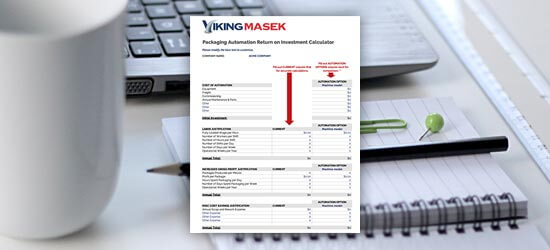
Packaging machine ROI calculator

Need help figuring out if packaging automation is right for your business?


First, start with the numbers. Download our free packing machine ROI calculator to learn how long it will take for an investment in automation to pay for itself (and much more).


Free packaging automation ROI calculator