Who Are the Top Copper Foil Tape Manufacturers in China?
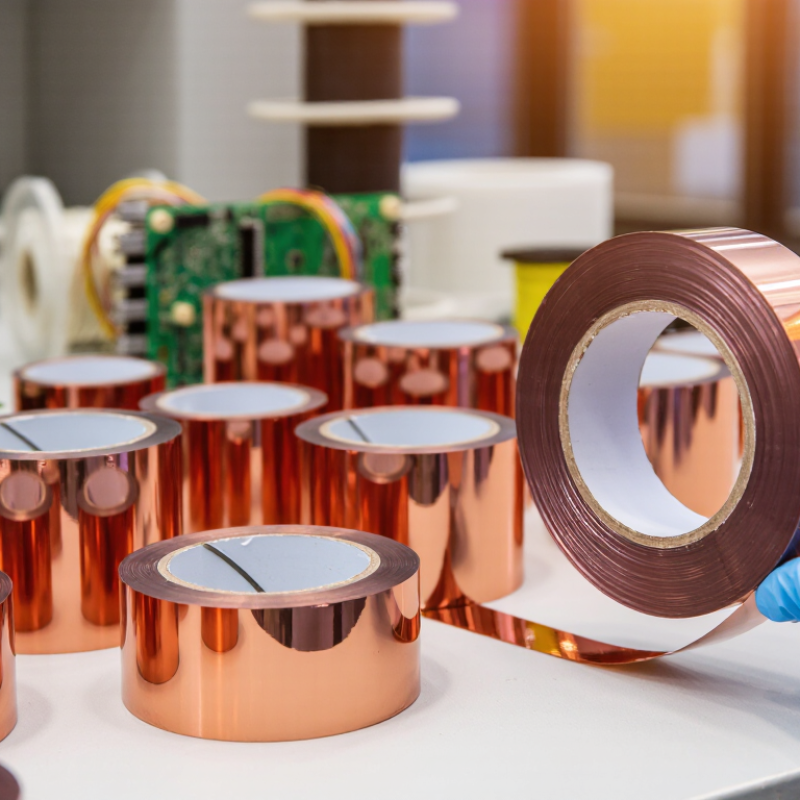
Copper Foil Tape is used where electrical conductivity, shielding, grounding, or reliable adhesion matters. Buyers may encounter it in cable assemblies, electronics, equipment maintenance, and other applications. A roll can look simple on a desk. In practice, the foil thickness, adhesive type, backing, and surface finish can change how it performs.
China has a broad manufacturing base, but supplier names alone reveal little about product suitability. This guide looks at manufacturers through practical questions: Do they publish clear specifications? Can they provide samples and consistent production details? Do their tapes meet the project’s needs for conductivity, adhesion, temperature resistance, and roll dimensions? These checks help separate a polished product page from useful evidence. They also make comparisons more grounded.
A careful evaluation should consider quality controls, customization options, communication, lead times, and export experience. Ask for technical data sheets, test methods, and sample rolls when available. Then test the tape on the actual substrate; laboratory figures may not predict every field condition. Small details matter. A liner that releases unevenly or an adhesive that lifts at a corner can cause real trouble.
No shortlist is perfect. Supplier capabilities and specifications can change, and public information may be incomplete. That uncertainty deserves attention, not a confident guess. The sections ahead introduce notable Chinese Copper Foil Tape manufacturers and explain what buyers can verify before requesting a quotation. Use the list as a starting point, then match each supplier’s documented capabilities to your application, volume, and quality requirements.
What Is Copper Foil Tape? 18, 35, and 70 μm Foil, Adhesives, and Uses
Copper foil tape consists of a copper backing and an adhesive layer, used for electrical shielding, grounding, repairs, and craft applications. The USGS Mineral Commodity Summaries 2025 estimated worldwide refined copper production at about 27 million metric tons in 2024. That figure describes the broader copper supply, not tape output, but it helps explain why material quality and sourcing matter.
An 18 μm foil is thin and flexible, useful on curved surfaces, though easier to crease. At 35 μm, the backing offers a practical balance of handling and conformity. A 70 μm foil feels stiffer and can tolerate more handling, but may not sit neatly around tight corners. Adhesives also matter: conductive adhesive can support electrical continuity across the bond, while standard pressure-sensitive adhesive may not. Confirm this in the product data sheet. A thickness label can mislead; it may describe the foil alone, excluding adhesive.
Tips: Check whether thickness means copper only or total tape. Test adhesion on a clean, dry surface before installation. For grounding, verify continuity with a multimeter after pressing the tape down. Small gaps matter.
Which Chinese Manufacturers Lead? Compare Capacity, Certifications, and Exports
China’s leading copper foil tape manufacturers are best compared by usable capacity, not headline output. Ask how many coating and slitting lines run consistently, and whether they can hold foil thickness, adhesive coat weight, and roll width within agreed tolerances. A sample roll should unwind smoothly, without edge burrs or uneven adhesive. Small details matter.
Certifications help, but check their scope, validity, and connection to the actual factory and product. A quality-management certificate does not prove that every tape grade performs equally well. Request recent test reports for adhesion, electrical conductivity, and heat resistance, where relevant. Then compare export experience through destination-specific packaging, traceable batch records, and documentation supplied with real shipments. Capacity on paper can look impressive. It may not reflect dependable delivery during peak demand. I would also ask for a trial order before judging a supplier; even good factories can have a weak product line or an inconsistent batch.
Who Leads China’s Copper Foil Tape Manufacturing?
A company-level comparison of capacity, certifications, and exports requires comparable, verifiable disclosures. No such figures are provided here, so the chart does not assign rankings or invent values.
How to compare manufacturers: Check disclosed production capacity and its product scope, verify certifications against the relevant facility and product, and compare export figures only when their reporting periods and product classifications match.
How Do Suppliers Compare on Peel Strength (N/25 mm) and Conductivity?
For Chinese copper foil tape suppliers, peel strength matters only when test conditions match. A figure in N/25 mm should specify the substrate, dwell time, peel angle, and test speed. Otherwise, two attractive figures may describe different tests. Small detail, big difference.
Ask suppliers to test samples on the same clean steel panel, after the same conditioning period. Record the force across several strips, not just one. A higher reading can help a tape stay attached to a panel edge, but it may also leave adhesive during removal. That trade-off is easy to miss. Check the failure surface, too: did the adhesive release, or did the tape stretch and tear?
Conductivity needs equally careful comparison. Copper foil conducts along its metal layer; some products also use conductive adhesive to carry current across a joint. These are not the same property. Request the measurement method and actual resistance data, including the contact setup. For shielding work, ask how the tape performs across the required frequency range, rather than relying on a general “conductive” claim. Datasheets rarely answer every question. A small, repeatable sample test can reveal gaps between published specifications and the way the tape behaves on a real enclosure.
Which Industries Use Copper Foil Tape for EMI/RFI Shielding and Grounding?
Copper foil tape is used across electronics, telecommunications, automotive, and industrial automation, where unwanted electromagnetic interference can disrupt signals. In electronics manufacturing, technicians apply it to enclosure seams, cable exits, and prototype housings. It can help create a conductive path when the tape’s adhesive and contact surfaces are suitable. Small gaps matter.
Telecommunications equipment often places copper tape around cabinet joints or grounding points to reduce interference near sensitive connections. In vehicles, it may shield wiring or electronic modules from noise produced by motors and switching systems. Industrial control panels use it around enclosures and cable routes, especially where sensors need stable readings. The exact application depends on frequency, enclosure design, and the surrounding materials.
Good preparation makes a difference. Dust, paint, and oxidation can weaken electrical contact, so installers usually clean the surface and press the tape firmly into place. Overlapping edges may help close seams, but they do not guarantee effective shielding. A detail is easy to miss: conductive adhesive does not always provide the same performance as direct metal contact. Engineers should check continuity and test the assembled product under realistic operating conditions. I would not assume a neat-looking strip is doing its job. A simple resistance check can reveal a poor ground before equipment is installed.
How Can Buyers Verify Quality with ASTM D3330, RoHS, and Lot-Test Data?
A buyer should treat ASTM D3330 peel results as comparable only when test conditions match. ASTM International’s method measures pressure-sensitive tape adhesion, but results depend on the test panel, peel angle, speed, and dwell time. Ask for the exact method, substrate, conditioning period, and force units—not just a number on a datasheet. For copper foil tape, inspect whether the reported value applies to the adhesive-to-panel bond or another interface. A clean-looking sample can still behave differently after installation.
RoHS documents address chemical composition, not bonding performance. European Commission guidance for the RoHS Directive limits restricted substances in homogeneous materials to 0.1% by weight, with a 0.01% limit for cadmium. Request a current declaration that identifies the tested material and report date.
Then compare it with lot-specific records: production lot, sample date, peel results, and test conditions. ASTM D3330 data from one batch cannot automatically verify another. And paperwork can look perfect. Check that the lot number on the report matches the delivered roll, and ask how out-of-range results are handled.
Gaps in traceability matter. A practical review may still miss variation across a wide roll, so buyers should agree on sampling before shipment.