What Are the Top Enclosed Circuit Breakers in 2026?
Choosing an Enclosed Circuit Breaker in 2026 is not just a brand decision. The right unit must match the circuit, installation environment, and equipment it protects. A breaker that looks robust on a product page may still be unsuitable for a damp workshop, a dusty plant room, or a tightly packed control panel.
This guide compares leading options through practical criteria: voltage and current ratings, interrupting capacity, pole configuration, enclosure protection, and ease of maintenance. It also considers documentation, accessory availability, and compatibility with the intended electrical system. Those details matter. A clear wiring diagram and accessible terminals can save time during installation and inspection. Yet specifications alone do not tell the whole story; actual suitability depends on the system design and conditions on site.
The strongest choice is the one that fits the application—not simply the one with the longest feature list. Readers will find a closer look at notable manufacturers, useful product differences, and questions to ask before selecting a model. We will distinguish verified specifications from broad marketing claims where possible. One limitation deserves attention: product ranges and regional configurations change, so a 2026 comparison cannot replace current manufacturer documentation. That caveat is easy to overlook. Check the exact model number, enclosure rating, and approved use before making a purchase or installation decision.
Define Enclosed Circuit Breakers by UL 489 and NEMA Enclosure Types
What Are the Top Enclosed Circuit Breakers in 2026?
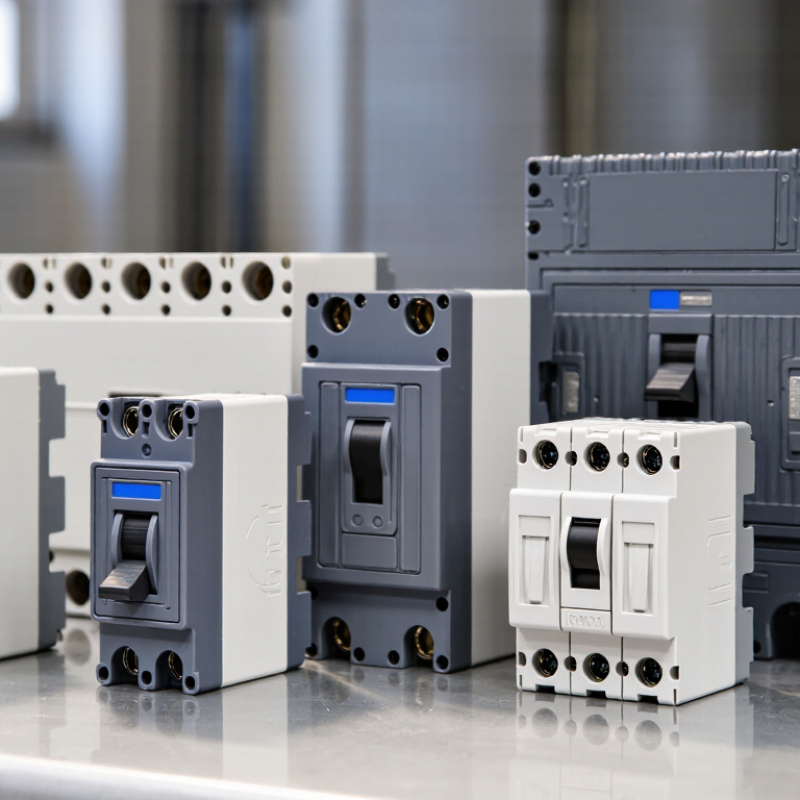
An enclosed circuit breaker is a circuit breaker installed inside a protective housing. UL 489 covers molded-case circuit breakers, molded-case switches, and circuit-breaker enclosures. It evaluates performance under defined electrical conditions; it does not make every enclosure suitable for every site. Check the breaker’s interrupting rating against the available fault current, then confirm the complete assembly’s ratings. Small details matter.
NEMA 250 classifies enclosures by environmental protection. Type 1 is intended for indoor use; Type 3R protects against rain; Type 4 addresses hose-directed water; and Type 4X adds corrosion resistance. NEMA 250 lists 13 enclosure types and variations, so matching a label to actual exposure is essential. Type 3R is easy to overread: it is not a promise against every environment. NFPA’s Electrical Fires report estimated 46,700 U.S. home structure fires annually involving electrical failure or malfunction from 2015–2019. That figure is not a measure of breaker effectiveness, but it underscores why correct selection and maintenance deserve attention.
Tips: Read the full nameplate, including voltage, amperage, and interrupting rating. For a washdown area, verify Type 4 or 4X suitability and material compatibility. Keep the door closed during operation. Have a qualified professional assess site conditions; the enclosure label alone cannot resolve every installation question.
Compare 2026 Leading Models by Voltage, Amperage, and Interrupting Rating
A useful 2026 comparison starts with the electrical system, not the enclosure’s appearance. For light commercial service, check whether a breaker is rated for 120/240 V single-phase or a three-phase system such as 208Y/120 V or 480Y/277 V. The voltage rating must suit the circuit and system configuration. A higher number is not automatically a better fit.
Amperage separates compact branch-circuit models from larger equipment-protection options. Common smaller units may cover 15–100 A, while some enclosed breakers serve higher-current applications. Check the breaker’s continuous-current rating, trip setting, and conductor requirements together. A panel door that closes neatly proves very little. Check the nameplate.
Interrupting rating, expressed in kiloamperes, is equally important. A 10 kA model may suit one installation, while a location with greater available fault current may require a higher rating, such as 22 kA or more. These figures are not interchangeable with voltage or amperage. Compare the published ratings against the installation’s calculated fault current, and verify the exact catalog specifications before selection. A tidy comparison table can still mislead if it leaves out system type, trip details, or enclosure environment. Have a qualified professional confirm the application.
Review NEC 240.6(A) Standard Ampere Ratings from 15 A to 6,000 A
When comparing enclosed circuit breakers in 2026, start with the ampere ratings in NEC 240.6(A). The listed standard ratings run from 15 A to 6,000 A, but not every size suits every installation. Common steps include 15, 20, 25, 30, 40, 50, 60, 100, 125, 200, 400, 600, 1,200, and higher ratings. Small numbers matter. A breaker’s ampere rating alone does not confirm that it is suitable.
Choose a rating based on the calculated load and the protected conductor’s allowable ampacity. Then verify the breaker’s interrupting rating against the available fault current at its installation point. Enclosure type and environmental conditions matter too. A dusty shop floor or a hot electrical room can affect equipment selection. Check the product’s marked ratings and installation instructions, not just a catalog headline.
NEC 240.6(A) provides standard ampere ratings; it does not replace the full design review. The locally adopted code edition and applicable requirements should be confirmed for the project. At higher ratings, coordination with upstream and downstream devices deserves close attention. This part can be overlooked. A practical comparison records the load, conductor size, fault-current conditions, enclosure location, and selected breaker rating together. Real sites are messy, so verify assumptions before ordering.
What Are the Top Enclosed Circuit Breakers in 2026?
NEC 240.6(A) Standard Ampere Ratings: 15 A to 6,000 A
The chart shows the standard ampere ratings specified in NEC 240.6(A) from 15 A through 6,000 A. These are standardized rating values, not a ranking of products or a recommendation for a particular installation. Verify applicable code requirements and equipment suitability for each application.
Apply NEC 210.20(A): Size Breakers for Continuous Loads at 125%
For an enclosed circuit breaker, NEC 210.20(A) sets a clear minimum: size overcurrent protection for the noncontinuous load plus 125% of the continuous load. A continuous load operates at its maximum current for three hours or more, as defined in NEC Article 100. For example, a 32-amp continuous load requires at least 40 amps of breaker capacity. Add any noncontinuous load separately. Not a guess. Check conductor ampacity, equipment ratings, terminal temperature limits, and the code edition adopted locally; a larger breaker is not automatically safe.
The risk deserves attention. NFPA’s report on home fires involving electrical distribution and lighting equipment estimated an annual average of 32,620 fires from 2015 to 2019. That figure does not mean undersized breakers caused those fires, but it underscores why sound protection design matters. When comparing enclosed breakers in 2026, verify voltage, poles, interrupting rating, enclosure suitability, and whether the assembly is listed for 100% continuous operation. That exception can change the sizing calculation, but only when the listing and installation conditions support it. A field detail is easy to miss: heat, dust, and crowded panels can affect the installation, so paper calculations alone are not enough.
What Are the Top Enclosed Circuit Breakers in 2026? — Apply NEC 210.20(A): Size Breakers for Continuous Loads at 125%
| Example Load | Continuous Load | Noncontinuous Load | NEC 210.20(A) Calculation | Minimum Calculated Rating | Example Standard Breaker Rating |
| Small continuous load | 10 A | 0 A | (10 A × 1.25) + 0 A | 12.5 A | 15 A |
| Mixed continuous and noncontinuous load | 16 A | 4 A | (16 A × 1.25) + 4 A | 24 A | 25 A |
| Continuous load | 20 A | 0 A | (20 A × 1.25) + 0 A | 25 A | 25 A |
| Continuous load | 24 A | 0 A | (24 A × 1.25) + 0 A | 30 A | 30 A |
| Continuous load | 32 A | 0 A | (32 A × 1.25) + 0 A | 40 A | 40 A |
| Continuous load | 40 A | 0 A | (40 A × 1.25) + 0 A | 50 A | 50 A |
| Continuous load | 48 A | 0 A | (48 A × 1.25) + 0 A | 60 A | 60 A |
Application note: These examples show the continuous-load sizing calculation and use standard breaker ampere ratings. They are not product rankings or a substitute for equipment selection. Verify the adopted NEC edition, system voltage, pole count, available fault current, enclosure suitability, conductor ampacity, terminal ratings, and all applicable installation requirements for the specific project.
Match Fault Duty to UL 489 Interrupting Ratings and IEC Icu/Ics Values
An enclosed circuit breaker is only a strong choice when its interrupting rating exceeds the available fault current at its installation point. UL 489 ratings are stated in amperes at a specified voltage; a rating selected at one voltage may not apply at another. Under IEC 60947-2, Icu is the ultimate short-circuit breaking capacity, while Ics indicates service breaking capacity after interruption. Check both values against the system’s calculated fault level and the equipment’s operating needs. Numbers matter.
The NFPA report Home Electrical Fires estimates that U.S. fire departments responded to about 24,200 home fires involving electrical distribution or lighting equipment each year from 2015 to 2019. That figure is not a breaker-sizing rule, but it underlines why protection details deserve careful review. Verify the prospective fault current, voltage, enclosure conditions, and coordination with upstream devices. Icu alone may look adequate, yet a low Ics can matter when continued service after a fault is important. I still see ratings compared without checking voltage. That shortcut can mislead. Confirm the exact marked rating and the applicable standard before specifying an enclosed breaker.