What Are the 2026 Top Gas Densitometer Types?
Choosing the best Gas Densitometer in 2026 requires more than comparing brochures, prices, or display features. Gas density changes with temperature, pressure, molecular composition, vibration, and contamination. A device that performs well in a laboratory may struggle beside a compressor, pipeline, or blending skid.
The leading types include vibrating-element, differential-pressure, buoyancy-based, and thermal-conductivity densitometers. Each design measures a different physical response. Vibrating-element models suit continuous process monitoring because they can deliver fast readings with limited sample handling. Differential-pressure instruments remain practical for robust field systems. Buoyancy methods can provide strong reference measurements, although they often require careful calibration. Thermal-conductivity devices may support rapid gas identification, but changing composition can complicate interpretation.
There is no universal winner.
Dr. Michael R. Moldover, a respected NIST metrology specialist, emphasizes a principle that remains highly relevant: “Reliable gas-property data begins with controlled temperature and pressure.” That reminder should guide every 2026 comparison. Accuracy is not created by the sensor alone. Installation quality, calibration history, gas conditioning, and software compensation matter just as much.
In real operation, a cold sample line can distort a seemingly stable result. A small pressure pulse can also create unexpected drift. These details are easy to overlook.
This guide examines the strongest Gas Densitometer types for modern laboratories, energy systems, industrial gas production, and process control. It considers accuracy, response time, maintenance, connectivity, safety, and total operating value. Some rankings may remain debatable, because application conditions often matter more than headline specifications.
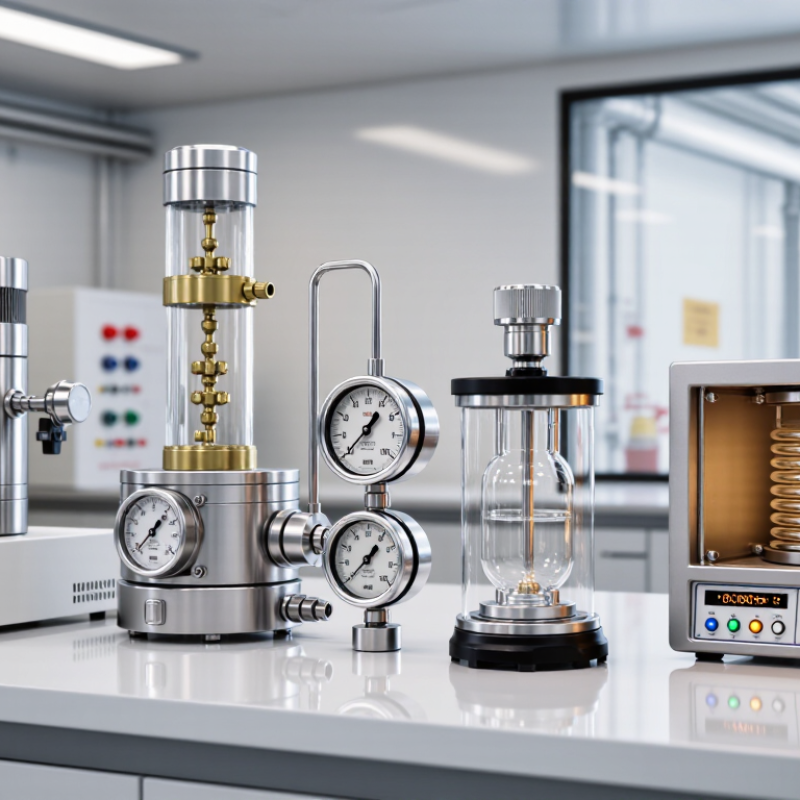
Gas Densitometers: Definition, Purpose, and Measurement Principles
What Are the 2026 Top Gas Densitometer Types?
Gas densitometers measure gas mass per unit volume, usually under controlled pressure and temperature. Their purpose is practical: custody transfer, blending control, leak investigation, and process optimization. The measurement principle matters because gas density changes sharply with pressure, temperature, and composition. ISO 6976:2016 and AGA Report No. 8 provide recognized methods for calculating natural-gas properties. NIST reference data also supports traceable density and compressibility calculations.
The leading 2026 types include vibrating-element, differential-pressure, Coriolis, and thermal-conductivity densitometers. Vibrating-element models detect frequency changes in a gas-filled resonator. They offer strong repeatability for laboratory and pipeline monitoring. Differential-pressure instruments infer density from pressure differences across a known restriction. They remain useful, but flow stability can affect results. Coriolis systems measure mass flow and density together. Thermal-conductivity units are compact and responsive, although gas mixtures can reduce their accuracy. Calibration matters.
Selection should follow the measurement environment. High-pressure pipeline service needs stable temperature compensation, certified calibration, and resistance to vibration. Portable testing favors low power and quick response. According to the IEA’s Gas 2024 report, global gas demand grew by about 2.5%, or roughly 100 billion cubic meters, in 2024. That expansion increases the need for dependable composition and density control. Still, a densitometer cannot correct poor sampling. That shortcut is tempting, but imperfect. Field verification remains essential, especially when moisture or changing gas composition distorts readings.
| Gas Densitometer Type | Measurement Principle | Primary Measured Property | Typical Measurement Range* | Typical Accuracy** | Pressure and Temperature Control | Common Applications | Main Advantages | Key Limitations |
|---|---|---|---|---|---|---|---|---|
| Vibrating-Element Gas Densitometer | A gas sample changes the resonant frequency of a vibrating tube, cylinder, or element. The frequency response is converted to density after calibration. | Gas density, with pressure and temperature compensation | Approximately 0.1–1,500 kg/m³, depending on pressure, gas composition, and instrument design | Typically ±0.05% to ±0.2% of reading in controlled process conditions | Often installed directly in pressurized pipelines; accurate temperature and pressure measurement is normally required | Natural-gas custody transfer, process control, gas blending, fuel-gas monitoring, and laboratory reference measurements | High repeatability, fast response, suitable for continuous measurement, and effective at elevated pressure | Requires calibration for gas composition; vibration, deposits, and condensate can affect the reading |
| Coriolis Gas Densitometer | Measures the Coriolis forces produced when gas flows through vibrating measuring tubes. The tube response is related to mass flow and density. | Gas density and, in many systems, mass flow rate | Approximately 1–1,000 kg/m³ for many industrial gas-service designs | Typically ±0.1% to ±0.5% of reading, depending on flow rate and installation | Pressure and temperature compensation may be integrated; installation must follow flow, piping, and vibration requirements | High-value gas transfer, compressed gases, hydrogen systems, specialty gases, and combined flow-density measurement | Direct mass-based measurement, no separate flow profile correction, and capable of measuring density and mass flow simultaneously | Higher cost, pressure drop, sensitivity to external vibration, and reduced performance at very low flow rates |
| Ultrasonic Gas Densitometer | Determines gas density from the speed and attenuation of ultrasonic waves traveling through the gas. | Gas density; some instruments also estimate gas composition or molecular weight | Approximately 0.05–300 kg/m³, depending on pressure and acoustic path design | Typically ±0.1% to ±0.5% of reading after gas-specific calibration | Pressure and temperature sensors are commonly used for compensation; suitable for in-line or bypass installation | Natural-gas quality monitoring, hydrogen and mixed-gas analysis, pipeline monitoring, and process gas control | No moving parts, rapid response, low maintenance, and suitable for continuous monitoring | Acoustic performance can be affected by moisture, particulates, turbulence, and changes in gas composition |
| Thermal-Conductivity Gas Densitometer | Measures the heat transfer or thermal conductivity of the gas using a heated sensor. Density is inferred through a calibrated relationship with gas composition and operating conditions. | Thermal conductivity used as an indirect density or composition indicator | Commonly used for gases near ambient density and for specific binary or limited-component mixtures | Typically ±0.5% to ±2% of reading, depending strongly on gas composition and calibration | Requires stable temperature; pressure compensation is needed when pressure changes significantly | Gas mixing, inert-gas monitoring, hydrogen concentration measurement, leak detection, and laboratory screening | Simple construction, fast response, low sample consumption, and relatively low operating cost | Not a universal density meter; readings can be ambiguous when several gases have similar thermal conductivity |
| Differential-Pressure Gas Densitometer | Uses the pressure difference created by a known gas column or restriction. Density is calculated from the pressure difference, height or geometry, and local gravity. | Density derived from hydrostatic or flow-related differential pressure | Approximately 0.1–100 kg/m³ in common gas-service configurations | Typically ±0.25% to ±1% of reading, depending on pressure-transmitter performance and installation | Accurate static pressure and temperature measurement are important; impulse lines require careful design | Gas storage vessels, flare-gas systems, process vessels, level-related density checks, and utility-gas monitoring | Uses established pressure-measurement technology and can be integrated into existing process instrumentation | Lower sensitivity at low density, affected by impulse-line errors, and unsuitable for rapidly changing or highly turbulent conditions |
| Capillary-Flow Gas Densitometer | Measures pressure drop or flow through a calibrated capillary under controlled conditions. Density is calculated from gas-flow behavior, often with viscosity compensation. | Density inferred from pressure-flow characteristics | Approximately 0.05–100 kg/m³, depending on capillary geometry and pressure conditions | Typically ±0.2% to ±1% of reading after application-specific calibration | Requires stable pressure, temperature, and controlled flow; often used with a conditioning or bypass system | Laboratory gas analysis, calibration systems, specialty-gas testing, and low-flow process measurement | Good sensitivity at low flow, compact sample path, and useful for controlled laboratory measurements | Sensitive to viscosity, contamination, moisture, and restrictions; less suitable for dirty or condensable process gases |
| Gravimetric or Buoyancy-Based Gas Density System | Determines density from the buoyant force acting on a calibrated body, or from the mass and volume of a known sample under controlled conditions. | Reference or absolute gas density | Approximately 0.001–100 kg/m³, depending on pressure, temperature, and test-cell design | Typically ±0.01% to ±0.1% in carefully controlled laboratory systems | Requires precise pressure and temperature control; atmospheric buoyancy and material stability must be considered | Metrology, calibration laboratories, reference data generation, gas-property research, and instrument validation | High measurement integrity and useful as a reference method for validating other densitometers | Slower measurement, larger equipment footprint, and generally unsuitable for routine in-line process control |