China Top Heat Shrink Wire Terminals Suppliers?
Choosing a supplier for Heat Shrink Wire Terminals takes more than comparing unit prices. These connectors combine a metal terminal with heat-shrink insulation, often including an adhesive liner. When heated, the tubing contracts around the wire and can help seal the connection against moisture. Small differences matter. Tubing thickness, shrink ratio, terminal material, and crimp design all affect fit and performance. Buyers should match the terminal to the wire gauge, application, and installation method. Ask for product specifications, sample parts, and test information before placing a large order. A careful crimp and an even shrink are worth checking on the bench. A catalog claim is not a test report.
This guide explores how to assess China-based suppliers and compare their capabilities without treating any list as a universal ranking. Look for clear answers about production processes, quality checks, customization, packaging, and batch traceability. Request samples in the sizes you actually use. Check whether the insulation recovers evenly and whether the terminal accepts the intended wire without loose strands or excessive force. These practical checks can reveal issues that a brochure may miss. Even so, a few samples cannot represent every production batch. That limitation deserves attention. The aim is not to promise a perfect supplier, but to help buyers ask better questions, verify important details, and build a shortlist suited to their electrical and operating requirements.
What Are Heat Shrink Wire Terminals and How Do They Work?
What Are Heat Shrink Wire Terminals and How Do They Work?
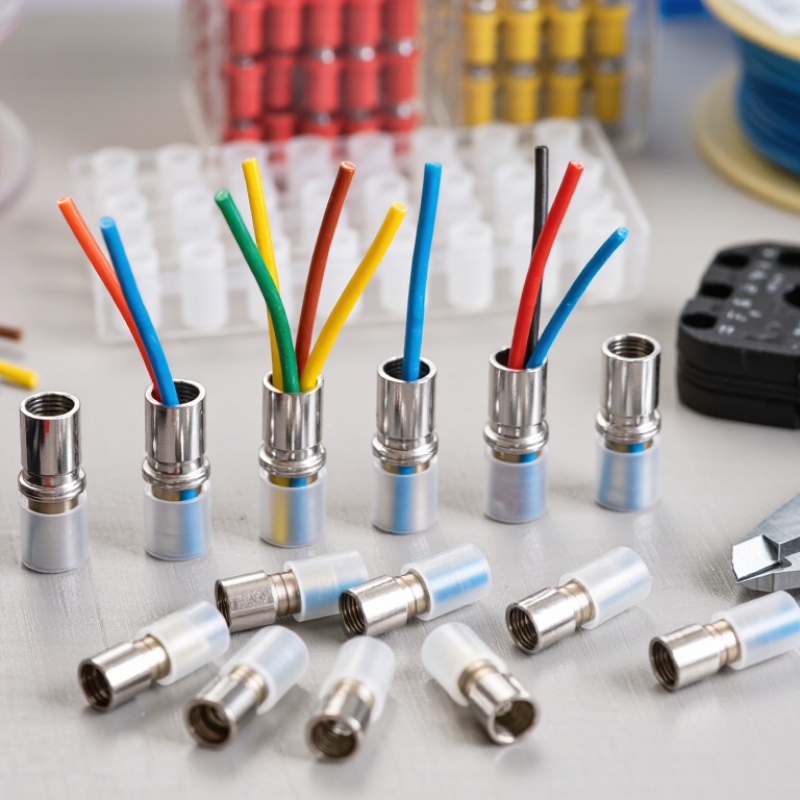
Heat shrink wire terminals combine a crimp connector with a heat-shrink sleeve. The metal barrel grips a stripped wire when compressed with the correct crimping tool. Around it, a polymer sleeve shrinks under controlled heat. Many designs include an inner adhesive lining that softens and fills small gaps around the wire insulation. The result is insulation and strain relief, with a seal that can help limit moisture entry when installation is correct. It is not automatically waterproof.
In practice, choose the terminal for the wire gauge, conductor material, and temperature rating. Strip only the specified length; exposed copper beyond the barrel can create a snag or short. Crimp firmly, then apply heat evenly until the sleeve fits closely and adhesive appears at the ends. Don’t overheat it. A scorched sleeve is a warning, not proof of a stronger seal. Small details matter.
For technical context, IEC 61238-1-1:2018 sets test methods and requirements for compression and mechanical connectors on power cables rated up to 1 kV. UL 486A-486B also addresses wire connectors and their performance testing. These standards help explain why a terminal’s rating and test evidence matter more than appearance alone. A neat-looking joint can still be poorly crimped. Check the manufacturer’s installation instructions and inspect a sample connection before repeating the process across a harness.
Which Types and Applications Are Common in China?
Chinese suppliers commonly offer heat-shrink butt connectors, ring terminals, fork terminals, and quick-disconnect tabs. Each serves a different connection. Butt connectors join two wires end to end, while ring and fork terminals secure a wire beneath a screw or stud. Male and female tabs support removable connections in appliances and vehicle wiring.
Insulation may be standard polyolefin or adhesive-lined tubing. Adhesive-lined types can help seal the wire entry against moisture, but they do not make every connection waterproof. Check conductor size, terminal dimensions, and temperature ratings against the actual installation. Fit matters. A connector that looks right may still be loose if its barrel does not match the wire. Common applications include automotive harnesses, household appliances, control cabinets, and low-voltage equipment. For repeatable results, use a crimping tool suited to the terminal and apply controlled heat until the sleeve shrinks evenly. This step is easy to rush. Even experienced technicians sometimes overlook strain relief, so inspect the finished joint before installation.
What Defines a Reliable Chinese Heat Shrink Terminal Supplier?
A reliable Chinese heat shrink terminal supplier is defined by repeatable quality, not a polished catalogue. The tubing should recover evenly, seal around the conductor, and resist splitting during installation. Crimp barrels need consistent dimensions and clean plating, while adhesive should flow without blocking the wire entry. Ask how copper, insulation, and adhesive are checked, and whether production batches can be traced. Useful evidence includes clear specifications, sample inspection data, and consistent answers from sales and engineering teams.
Tips: Request samples from different production batches. Crimp them with your intended tool, then inspect the seal after cooling. Record wire size, pull results, and shrink behavior.
A dependable supplier discusses limits as clearly as capabilities. They should explain compatible wire ranges, temperature limits, storage conditions, and installation caveats in plain language. Try a small pilot order before scaling. It may feel slow, but it can reveal uneven tubing recovery or loose terminals that one sample hides. Response time matters, too; practical answers to drawing changes are more useful than instant promises. No supplier is perfect. Look for documented corrections when a batch misses agreed dimensions, rather than relying on assurances alone.
How Do Leading Suppliers Compare in Products and Capabilities?
Comparing China’s heat-shrink wire-terminal suppliers means looking beyond catalog size. The IEA’s Electricity 2024 report projects global electricity demand to grow by an average of 3.4% annually from 2024 to 2026. That growth increases the need for dependable electrical connections, though it does not prove demand for any particular terminal type. A useful comparison starts with product range: ring, fork, butt-splice, and quick-disconnect terminals; supported wire gauges; and copper or other conductor materials. Check whether heat-shrink sleeves contain adhesive and whether suppliers state shrink ratios and operating-temperature ranges. Small details matter.
Production capability matters just as much. Ask for crimp-force guidance, dimensional inspection records, material declarations, and test reports tied to the exact product. A supplier offering several sleeve colors may be less useful than one providing consistent barrel dimensions and traceable batches. Request samples across different wire sizes, then inspect the crimp and seal after heating. I would not judge quality from one neat sample alone. It can hide variation between batches. Clear answers on customization, lead times, and quality controls offer a more realistic picture of supplier capability.
How Can Buyers Verify Quality, Compliance, and Export Readiness?
When evaluating China-based heat-shrink wire terminal suppliers, ask for evidence tied to the exact part number, not a generic product sheet. Request material specifications, dimensional drawings, crimp-range data, and test reports covering insulation recovery, pull force, and temperature performance. Check that reports identify the sample size, test method, date, and testing laboratory. A certificate without matching models can look reassuring while proving little. Ask for a recent production sample, then inspect sleeve fit, metal finish, barrel dimensions, and shrink consistency after heating. Small details matter.
Confirm the supplier’s quality process through incoming-material records, calibration logs, inspection criteria, and traceable batch codes. If possible, compare samples from separate lots; one good sample does not prove a stable process. Verify conformity documents against the destination market and product scope, and ask who updates them when specifications change. For export readiness, confirm carton labels, packing lists, invoices, origin details, lead times, and document consistency before shipment. Ask for evidence. A polished PDF is not proof by itself. A production-floor video call can help, but it cannot replace an audit or independent testing. These checks are not perfect, and paperwork can lag behind factory changes. That uncertainty is worth discussing before an order ships.