


Top 10 Heavy Duty Truck Radiators for Global Buyers
Choosing a Heavy duty truck radiator is not a cosmetic decision; it affects cooling stability, uptime, and repair planning. Global buyers also face different duty cycles, climates, fuel loads, and service networks. A truck working dusty routes in high heat needs different attention from one hauling steadily on cooler highways. Small details matter. Core dimensions, tank material, fin design, connection points, and pressure ratings should match the vehicle and its operating demands. An attractive price cannot compensate for a poor fit or uncertain parts support.
This guide reviews ten heavy-duty truck radiator options for buyers comparing replacement and fleet-supply choices. It focuses on practical factors: vehicle compatibility, construction, cooling capacity, durability, availability, and after-sales support. Specifications should be checked against the truck’s service manual and the supplier’s current documentation. Product listings can omit important details, so ask for exact dimensions, test information, and warranty terms before ordering. That extra check may feel slow. It can prevent a costly mismatch.
No single model suits every fleet. The strongest choice depends on engine configuration, ambient temperatures, load, maintenance habits, and local access to parts. Some comparisons will remain imperfect because brands publish different levels of technical detail. We treat that gap openly rather than pretending every product has been tested under identical conditions. Use the shortlist as a starting point, then verify fitment and service support for your specific truck. That is the safer buying process.
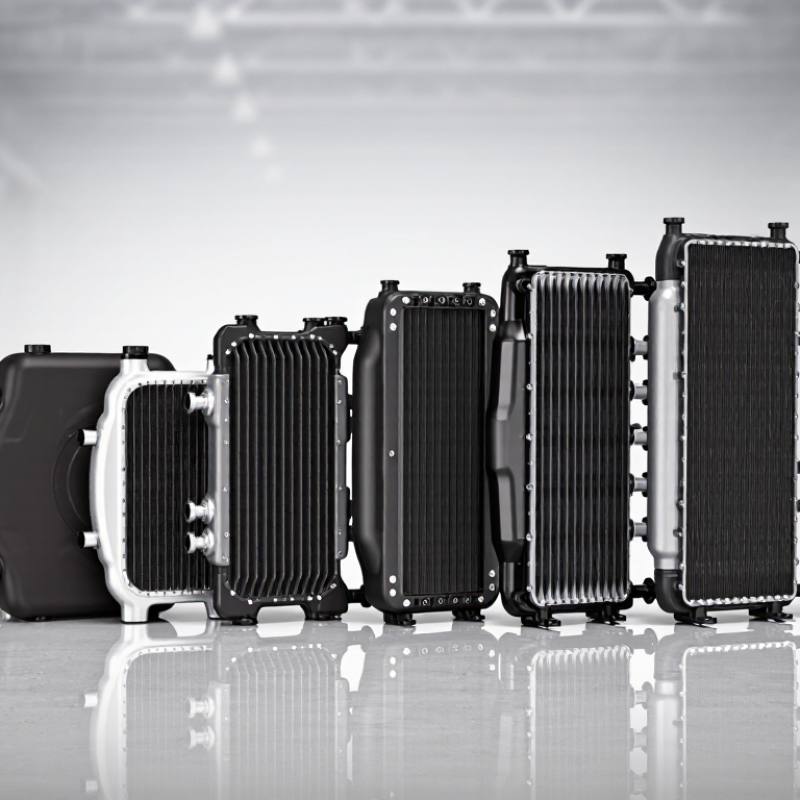
Understanding the Role of Heavy-Duty Truck Radiators
A heavy-duty truck radiator helps control engine temperature by transferring heat from coolant to outside air. Hot coolant flows through narrow tubes, while fins increase the surface area available for cooling. Air moves across the core through vehicle motion and fan operation. The cooled liquid then returns to the engine. It is a continuous cycle, but performance depends on more than the radiator alone.
At highway speed, airflow may be strong; during slow climbs or long idling periods, the fan becomes especially important. Small details matter. Dust, bent fins, or debris between the radiator and condenser can restrict airflow. A pressure cap also helps maintain the system’s designed pressure, though the correct specification depends on the vehicle. During inspections, look for coolant stains, damaged fins, loose connections, and temperature changes under load. A clean core does not guarantee efficient cooling, and a temperature spike may have several causes. That can be easy to overlook. For global buyers, radiator fit, core construction, cooling capacity, and compatibility with the truck’s operating conditions deserve careful review.

Key Specifications for Comparing Radiators Across Truck Models
Compare heat-rejection capacity under identical test conditions, not by core size alone. Request the rated coolant flow, inlet temperature, ambient temperature, airflow, and pressure drop. Small test differences can make two catalog figures misleading. The U.S. Department of Energy’s SuperTruck II program reported a 55% brake thermal efficiency demonstration. That figure does not define radiator capacity, but it reinforces why buyers should match cooling performance to the engine’s actual operating envelope. Check performance at sustained climbs and slow, hot-weather operation—not only highway speed.
Record core height, width, thickness, tube-row count, fin density, and coolant-side pressure drop. More rows may increase capacity, but can also restrict airflow or complicate fan matching. Check maximum working pressure, hose-neck position, mounting points, drain access, and shroud clearance against the specific truck model. Fit matters. Material and corrosion protection also deserve scrutiny, especially where road debris, vibration, or frequent washdowns are expected. Ask for test results using the intended coolant mixture; a rating based on different fluid or airflow may not transfer cleanly. That detail is easy to overlook. And a larger radiator is not automatically a better replacement. Insist on documented heat rejection and pressure-drop data before comparing quotes.
Radiator Designs, Materials, and Cooling Performance
Heavy-duty truck radiators differ in core layout, materials, and airflow design. Many use aluminum cores because they are light and transfer heat efficiently. Copper-brass construction can be easier to repair in some workshops, but it is often heavier. Neither material wins in every operating condition. The right choice depends on engine output, available space, vibration, and service access.
Tube-and-fin design affects how coolant and air move through the core. Wider tubes may support greater coolant flow, while closely spaced fins provide more surface area. Yet dense fins can collect dust, chaff, or mud on trucks working unpaved routes. Small details matter. A radiator that looks powerful on paper may cool poorly if airflow is restricted by a damaged shroud or packed debris.
Buyers should compare rated cooling capacity with the truck’s real duty cycle, including long climbs, stop-and-go traffic, and hot weather. Check dimensions, mounting points, hose connections, pressure rating, and compatibility with the specified coolant. A larger core is not automatically better; it may add weight or create fitment problems. That is measurable. Still, catalog ratings rarely capture every vehicle’s condition, and that gap deserves attention. Review test data, inspect fin and weld quality, and confirm that replacement parts are available before choosing.
Ten Heavy-Duty Truck Radiators for Global Buyer Consideration
For global buyers, ten heavy-duty truck radiators are worth comparing by fit, cooling capacity, materials, and serviceability—not price alone. Consider direct-fit replacement cores, aluminum and copper-brass designs, different tube-and-fin layouts, and options suited to dusty, humid, or cold routes. Check core dimensions, hose positions, mounting points, pressure limits, and compatibility with the truck’s engine and cooling system. Fit matters.
ACEA’s 2024 Vehicles on European Roads report counted about 6.4 million trucks in the European Union, with an average age of 14.1 years. That aging fleet highlights the value of reliable replacement parts, though European figures cannot represent every market. For each candidate, ask for documented heat-rejection data and pressure-test results under stated conditions.
Compare corrosion protection, vibration resistance, repairability, and access to replacement components. A dense fin pack may look impressive, yet it can collect debris in demanding work environments. Not just price. A tidy specification sheet can also miss real operating conditions, so confirm performance against the truck’s actual duty cycle and local service capacity.
How to Evaluate Compatibility, Sourcing, and Long-Term Service Needs
A heavy-duty truck radiator must match more than the vehicle’s model year. Check the engine code, cooling capacity, core dimensions, inlet and outlet positions, mounting points, and fan-shroud clearance. Measure the existing unit before ordering; a few millimeters can affect hose alignment or installation. Also confirm whether the truck uses a standard or charge-air cooling arrangement. Small details matter.
For international sourcing, request a drawing, material specification, pressure-test information, and clear packaging dimensions. Compare these details with the truck’s service records, not just a supplier’s product description. Shipping conditions deserve attention, too. A radiator can arrive with bent fins if it is poorly protected against vibration or impact. Ask how replacement parts, technical questions, and warranty claims are handled across time zones. These answers reveal more than a low purchase price.
Long-term service depends on repair access and the availability of compatible hoses, caps, and mounting hardware. Review the maintenance instructions and inspect the core for debris or damaged fins during routine service. Keep records of coolant changes and operating temperatures; they can help identify a developing problem before downtime grows. I have seen fitment checks rushed under delivery pressure. That is easy to regret. A sample installation or a careful drawing review may feel slow, but it can prevent avoidable rework.


