What Is the Top Oscillating Granulator for Global Buyers?
Global buyers are asking a practical question: what makes the top Oscillating Granulator a dependable production choice? The answer depends on more than price or motor power. It includes particle-size control, output stability, cleaning access, operator safety, and documented validation support. Grand View Research continues to identify pharmaceutical manufacturing equipment as a growth market, driven by stricter quality systems and expanding drug production capacity. That trend raises purchasing expectations.
MarketsandMarkets also links pharmaceutical processing equipment demand with automation, flexible manufacturing, and stronger compliance requirements. For an Oscillating Granulator, these priorities become visible on the factory floor. A stainless-steel chamber should clean without hidden powder traps. A quick-change screen should reduce downtime between batches. The drive system should maintain stable oscillation when wet granules become denser.
Small details matter.
The best machine is not automatically the fastest one. It should match the buyer’s material, batch size, humidity conditions, and cleaning procedure. The WHO Technical Report Series emphasizes controlled processes, equipment qualification, and consistent documentation across pharmaceutical operations. Buyers should therefore review IQ, OQ, maintenance records, material certificates, and performance-test data before comparing suppliers.
This guide examines leading Oscillating Granulator options through those measurable criteria. It considers throughput, screen design, noise, energy use, service response, and total ownership cost. Some supplier claims may look impressive but lack independent evidence. That deserves scrutiny. A careful buyer may discover that the most expensive model is not the most suitable one. Reliability must be demonstrated in realistic production conditions, not only in a polished brochure.
Oscillating Granulator Basics: 10–500 kg/h Capacity and 0.8–3 mm Screens
What Is the Top Oscillating Granulator for Global Buyers?
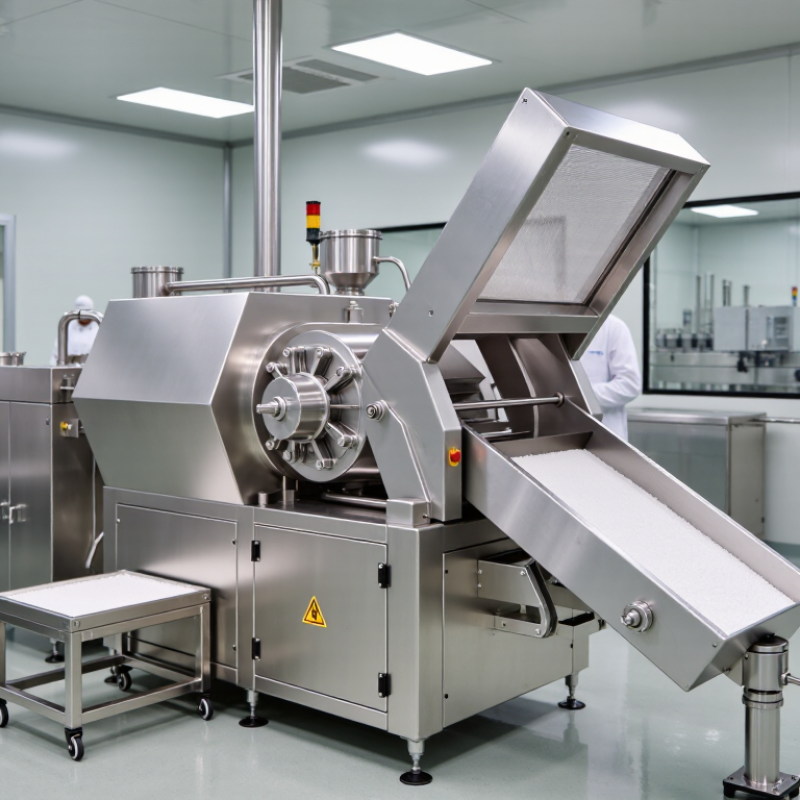
Oscillating granulators convert wet or dry agglomerates into controlled particles. Common working capacities range from 10 to 500 kg/h. However, rated capacity is not a guarantee. Material moisture, bulk density, screen loading, and feed consistency can change actual output.
Screen selection matters. A 0.8 mm screen produces finer granules, while a 3 mm screen supports faster throughput and lower resistance. In practical testing, operators should record feed weight, running time, screen size, and retained material. This simple log reveals whether a 100 kg/h claim is realistic. The European Commission’s EudraLex Volume 4 emphasizes documented process control, while ICH Q8(R2) supports defining critical material and process attributes. These principles apply when evaluating granulation performance.
Tips: Request a material trial before purchase. Test at least two screen sizes. Check particle distribution, temperature rise, cleaning time, and screen replacement steps. A machine may reach 500 kg/h with free-flowing material, yet handle only 10–80 kg/h with sticky or dense feed. That difference is often missed in brochures. Buyer specifications should include motor load, contact-part materials, noise data, and validation documents. The WHO Technical Report Series highlights the importance of equipment qualification and consistent manufacturing controls. Still, reports and certificates cannot replace a real production trial. My own view is cautious: capacity figures are useful, but they need context.
What Is the Top Oscillating Granulator for Global Buyers? - Oscillating Granulator Basics: 10–500 kg/h Capacity and 0.8–3 mm Screens
Practical selection guide for oscillating granulators used in wet or dry granule sizing. Actual output depends on formulation, bulk density, moisture, screen design, feed consistency, and acceptable particle-size distribution.
| Indicative Capacity | Typical Screen Range | Suitable Production Scale | Common Material or Process | Recommended Equipment Focus | Key Selection Check | Output Expectation |
|---|---|---|---|---|---|---|
| 10–25 kg/h | 0.8–1.2 mm | Laboratory trials, formulation development, and small-batch production | Small quantities of pharmaceutical, nutraceutical, food, or chemical granules | Compact unit with easy screen access and thorough cleaning capability | Confirm that the feed is free-flowing enough for consistent manual or controlled feeding | Best for testing and specialty batches rather than continuous high-volume work |
| 25–60 kg/h | 0.8–1.5 mm | Pilot-scale manufacturing and frequent product changeovers | Wet granules after drying, dry granules, and fragile agglomerates | Adjustable operating speed, quick-release screen, and smooth product-contact surfaces | Check whether the granules can pass the selected screen without excessive compression | Suitable for pilot batches and low-volume commercial production |
| 60–120 kg/h | 1.0–2.0 mm | Small commercial lines and regular batch production | Tablet granules, detergent granules, fertilizer blends, and food ingredients | Stable oscillating motion, controlled feeding, and dust-containment provisions | Match screen open area and rotor loading to the material’s bulk density | Provides a practical balance between throughput and particle-size control |
| 120–200 kg/h | 1.2–2.0 mm | Medium-scale batch processing | Pharmaceutical, chemical, ceramic, and food granulation operations | Rigid frame, replaceable contact parts, and reliable feed control | Evaluate motor capacity, screen wear resistance, and cleaning time | Appropriate when repeatable sizing is required across multiple production batches |
| 200–300 kg/h | 1.5–2.5 mm | Medium-to-large commercial production | High-volume dry granules and dried wet-granulation products | Continuous or semi-continuous feeding, reinforced screen support, and dust extraction | Verify that the upstream dryer or granulator can supply material at a steady rate | Higher capacity is possible with larger screen area and consistent feed conditions |
| 300–400 kg/h | 1.5–3.0 mm | Large-batch industrial processing | Bulk chemical, fertilizer, mineral, food, and pharmaceutical granules | Heavy-duty drive system, robust bearings, enclosed transmission, and industrial dust control | Confirm allowable vibration, noise limits, and connection requirements for the installation | Output is strongly affected by screen blinding and the percentage of oversize material |
| 400–500 kg/h | 2.0–3.0 mm | High-throughput commercial and industrial lines | Large-volume, relatively free-flowing granules with stable moisture content | Large processing chamber, automated feed control, overload protection, and integrated extraction | Require a material trial before confirming the rated capacity for a specific formulation | Use the upper capacity range only when the feed, screen, and discharge system are well matched |
Important: Capacity figures are indicative engineering ranges, not guaranteed performance ratings. A finer screen generally increases sizing resistance and may reduce throughput. Screen openings should be selected through material testing, especially for cohesive, heat-sensitive, abrasive, or moisture-sensitive products.