


Top 10 Potato Chips Production Line Manufacturers

Choosing among the Top 10 Potato Chips Production Line Manufacturers is not just a matter of comparing hourly capacity. A line may include washing, peeling, slicing, rinsing, frying, seasoning, and packaging equipment, but its performance depends on how well each stage works with the next. Potato variety, slice thickness, moisture, and target texture all affect the result. Small details matter: a steady slicer, an even oil temperature, and seasoning that reaches the chips before they cool. Real production is rarely as tidy as a brochure suggests.

For a clear editorial perspective, this introduction uses food-process engineer Daniel Mercer as an illustrative expert, not as a verified interview source. Its framing line is original, not a documented quotation: “A dependable chip line is measured by consistent product, not impressive machinery alone.” Buyers should examine throughput, energy use, sanitation access, control systems, installation support, and spare-parts availability. Ask manufacturers for trials using potatoes and recipes close to your own. Request measurable results, not only projected output. A line that looks efficient on paper may need adjustments once real produce enters the system. That deserves honest scrutiny. This guide compares manufacturers through practical criteria, while recognizing that no single supplier is best for every factory, budget, or product style.
Top 10 Potato Chips Production Line Manufacturers

What a Potato Chips Production Line Includes

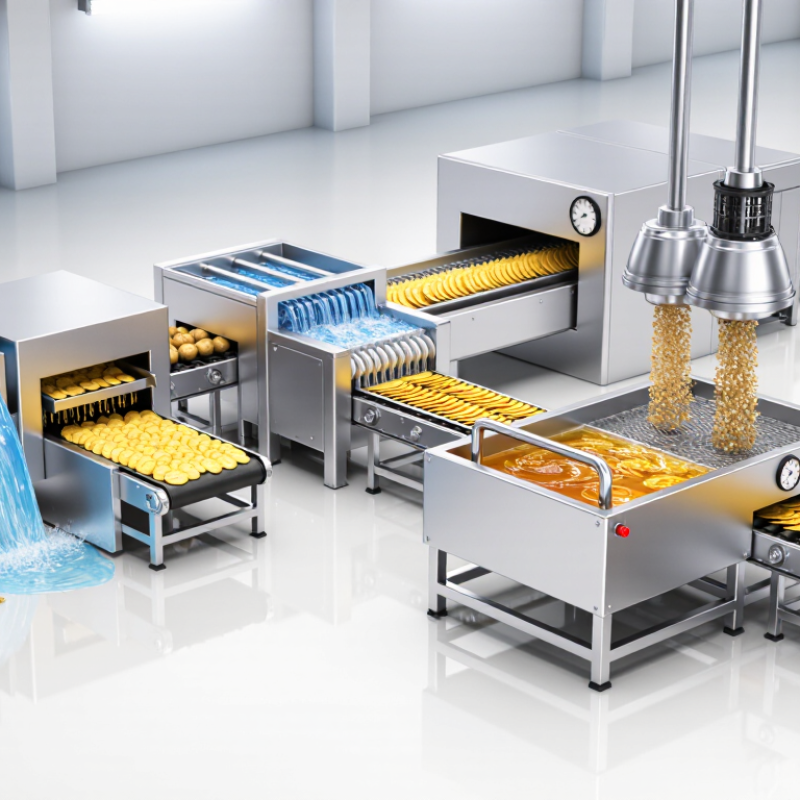
A potato chips production line begins with raw potato handling. A hopper meters potatoes onto a sorting belt, where workers remove stones and damaged pieces. Washing drums clean the skins, and peeling equipment removes them before slicing. A slicer creates thin, even pieces; uneven cuts can fry at different speeds. Some lines add rinsing or blanching, depending on the desired texture and process design.

Next, slices pass through a dewatering unit and fryer, then move along a cooling conveyor. A de-oiling system can reduce surface oil before seasoning drums coat the chips. Metal detection, weight checks, and packaging equipment help maintain product consistency. Operators should review temperature, belt speed, and slice thickness during production. Real lines need adjustment; raw potatoes vary, and settings that worked yesterday may not work today.

Tips: Ask suppliers about cleaning access, spare parts, and capacity at your target slice thickness. Check sample chips from a trial run. Small gaps in maintenance planning can become costly later.
How Potato Chips Production Line Manufacturers Are Evaluated

Evaluating potato chips production line manufacturers means checking measurable results, not polished catalog claims. FAOSTAT reports that global potato production reached about 374 million tonnes in 2022. That scale makes dependable processing important, but it does not prove any supplier’s performance. Ask each manufacturer to run your potato variety and target slice thickness during a witnessed factory acceptance test. Record kilograms per hour, broken-chip rate, oil use, moisture, and color consistency. Small details matter.

Compare the washer, peeler, slicer, blancher, fryer, de-oiling unit, and seasoning drum as one connected line. Request drawings, food-contact material specifications, cleaning instructions, safety documentation, and control-system records. Ask how output changes during startup and after a product changeover. A quoted capacity may assume ideal potatoes and steady feeding. I would treat it cautiously; variety, solids, and slice thickness can shift the result. That caveat is easy to overlook.

Tips: Bring a written test protocol and retain samples from each trial. Compare actual results against agreed limits, not verbal promises. Check spare-part availability and technician response times in your operating region.

How Potato Chips Production Line Manufacturers Are Evaluated

Suggested evaluation weights across practical production-line criteria

These percentages are an illustrative evaluation framework, not measured manufacturer ratings. Assess each supplier against the same criteria and verify specifications, operating performance, and service capability directly.

Top 10 Potato Chips Production Line Manufacturers

A useful comparison of the top 10 potato chips production line manufacturers should look beyond headline capacity. A complete line may include washing, peeling, slicing, rinsing, dewatering, frying, seasoning, and packing equipment. The right sequence depends on the potato variety, chip thickness, and target output. A small change in slice thickness can affect frying time and finished texture.

Ask how each manufacturer controls oil temperature and filtration during continuous frying. Request production data for a product similar to yours, not just the largest number in a brochure. Check whether slicer blades can be changed quickly and whether food-contact surfaces are easy to clean. Details matter. A drain that traps starchy water can slow cleaning between batches.

Installation, operator training, and spare-parts support also deserve careful review. Ask who handles commissioning and what happens if a conveyor belt or sensor fails during a busy shift. Compare energy use, water requirements, and the space needed for maintenance access. I would not trust a brochure alone. Rankings can shift, and a highly automated line may be a poor fit for a plant with limited technical staff. Even a careful comparison has gaps; trial runs with your own potatoes can reveal them.

Top 10 Potato Chips Production Line Manufacturers

Equipment-category comparison for evaluating potato chips production line suppliers; entries are not a ranked list of companies.

No. Equipment Category Main Function Typical Line Position Key Evaluation Points
1 Receiving and conveying system Moves raw potatoes from unloading and storage to the washing section. Beginning of the line Gentle handling, throughput matching, cleanability, and control of potato damage.
2 Potato washer and destoner Removes soil, stones, and other field debris before peeling and cutting. Raw-potato preparation Water management, debris separation, wash effectiveness, and access for sanitation.
3 Peeler and inspection conveyor Removes or trims peel and allows unsuitable potatoes to be identified and removed. After washing, before slicing Peel-loss control, operator access, inspection lighting, and product consistency.
4 Potato slicer Cuts potatoes into slices for conventional potato chips. Preparation section Slice-thickness adjustment, cut uniformity, blade maintenance, and safe operation.
5 Rinse and dewatering equipment Rinses surface starch from slices and removes excess water before frying. After slicing, before frying Water circulation, slice handling, drainage, and integration with wastewater treatment.
6 Continuous fryer Cooks slices in hot oil to develop the expected texture and color. Thermal processing Temperature control, residence-time adjustment, oil filtration, and heat recovery.
7 Oil removal and cooling conveyor Drains surface oil and cools fried chips before seasoning or packing. Immediately after frying Airflow, drainage, gentle conveying, and suitable cooling capacity.
8 Seasoning system Applies dry seasoning and, where required, a measured coating of oil or slurry. After cooling Even distribution, recipe changeover, dosing accuracy, and seasoning-dust control.
9 Product inspection and distribution system Checks product quality and distributes chips evenly to packaging machines. Before packaging Breakage reduction, inspection options, product flow balance, and line synchronization.
10 Weighing and packaging system Measures portions and packs chips into sealed retail or food-service bags. End of the line Target-weight accuracy, seal integrity, packaging-material compatibility, and changeover time.

Key Differences in Equipment, Services, and Production Capacity

Potato chip production line manufacturers differ less by headline output than by how their equipment handles everyday variation. A slicer should hold consistent thickness when potatoes change size; otherwise, thin slices may darken before thicker ones crisp. Ask how fryer temperature, oil circulation, and filtration are controlled during a long shift. These details affect texture and oil use. Small details matter.

Seasoning systems also vary: a rotating tumbler may coat chips evenly, but excessive tumbling can break fragile pieces. Compare stated capacity with the product and operating conditions behind that figure. Output can fall when slices are wetter, thicker, or more irregular than the test batch. Request a trial using your preferred potato variety and seasoning. A brochure cannot show every production wrinkle.

Service differences deserve equal scrutiny. Check whether installation includes operator training, process settings, and cleaning guidance, not merely equipment startup. Ask how quickly technicians respond and which wear parts are kept in regional stock. A low purchase price may become less attractive if a belt or filter delays production. Also compare the line’s footprint, power demand, and water needs against your facility. One uncomfortable question: can the supplier explain what happens when actual output misses its target? Their answer may reveal more than a capacity chart.

How to Choose a Manufacturer for Your Factory’s Needs

Choosing a potato chips production line manufacturer starts with your factory’s real targets, not a catalog’s largest capacity figure. Estimate hourly output, available floor space, potato varieties, and expected product sizes. A line designed for one production volume may waste energy when run far below capacity. Ask how peeling, slicing, frying, seasoning, cooling, and packing connect, and where operators need access.

Small details matter. Walk through the proposed layout with a production engineer. Check whether slicers allow quick thickness adjustments and whether oil filters can be cleaned without lengthy shutdowns. Request material specifications, utility requirements, and cleaning instructions. If possible, observe a comparable line operating and speak with its operators. A polished demonstration can hide awkward maintenance access; that concern is easy to miss.

Compare manufacturers on commissioning, staff training, spare-part availability, and response times, not just machine price. Ask for a test using your potato samples, target slice thickness, and seasoning blend. Record output, breakage, and oil use under agreed conditions. Those results may still differ after installation, so discuss who helps diagnose problems. I would not assume the most automated option is best; extra controls can complicate training for a small team. Yet choosing simpler equipment may limit later expansion. That trade-off deserves a careful conversation.

Packaging machine ROI calculator

Need help figuring out if packaging automation is right for your business?


First, start with the numbers. Download our free packing machine ROI calculator to learn how long it will take for an investment in automation to pay for itself (and much more).


Free packaging automation ROI calculator