


Top Wheel Diamond Cutting Machine Manufacturers for Global Buyers
Selecting a Wheel Diamond Cutting Machine manufacturer is not just a price comparison. Global buyers need equipment that matches their materials, production volume, and workshop conditions. A machine used for precise stone or engineered-surface work may require different specifications from one used for other hard materials. Small details matter, including spindle stability, cutting depth, table movement, and water management. They affect daily results.
This guide introduces manufacturers and the questions buyers can use to assess them. Product specifications are useful, but they do not tell the whole story. Ask for clear technical documentation, realistic performance information, and examples of machines suited to comparable applications. Check how the supplier handles installation guidance, spare parts, operator training, and service across your region. A polished catalog is only a starting point. References and direct technical answers can reveal more.
No single manufacturer is right for every buyer. A lower purchase price may bring higher setup or maintenance demands; a feature-rich model may exceed a small shop’s needs. Compare total ownership costs, not just the machine’s listed price. Where possible, review a sample cut or arrange a live demonstration using similar material. This overview cannot replace an independent inspection, and supplier claims still need verification. That extra effort takes time, but it can prevent an expensive mismatch.
Diamond Wheel Cutting Machines: Types, Workflows, and Industry Applications
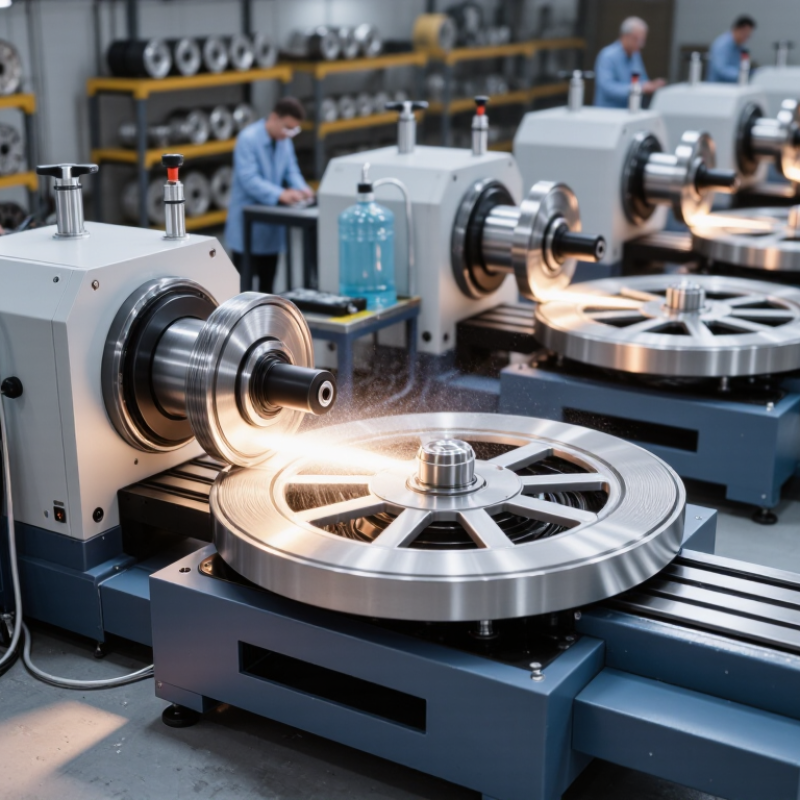
Diamond wheel cutting machines vary by wheel geometry, spindle layout, and workholding. Peripheral wheels suit straight, repeatable cuts in hard materials. Thinner wheels can reduce kerf width, but need careful handling. Cup or profile wheels help create shaped edges and controlled contours. Suitability depends on the material, wheel bond, grit, and machine rigidity. The word “diamond” alone tells little.
A typical workflow starts with checking wheel condition, runout, coolant flow, and fixture security. Operators set feed and depth conservatively, make a test cut, then inspect edge chipping under magnification. Wet cutting can carry heat and debris away, though coolant must suit the workpiece and process. Keep the workpiece stable. Small vibrations can spoil a finish.
In electronics, optics, ceramics, and precision stonework, these machines cut brittle or abrasive stock into wafers, blanks, slots, and shaped edges. Automated stages support repeatability across batches; manual or semi-automatic setups may suit prototypes and mixed jobs. Selection should reflect tolerances, part dimensions, throughput, and maintenance access. A common mistake is optimizing cycle time before checking wheel wear. That tradeoff may look fine on paper, then drift in production.

Key Specifications: Wheel Diameter, Spindle Speed, Feed Rate, and Tolerance
When comparing top wheel diamond cutting machines, start with wheel diameter and spindle speed together. A larger wheel changes peripheral speed at the same revolutions per minute. Calculate it as V = πDn/60, using diameter in metres. For example, a 200 mm wheel at 3,000 rpm runs at about 31.4 m/s. Confirm the machine and wheel ratings allow that speed. ISO 6104 provides a technical reference for superabrasive wheel dimensions and designations; it does not replace equipment-specific limits.
Feed rate should match the material, wheel bond, and cut depth. Too much feed can cause chipping or heat marks; too little may waste cycle time. Ask suppliers to state feed units, control resolution, and test conditions. Small details matter. A setting reported in millimetres per minute is not directly comparable with one reported per tooth or per pass.
Tolerance claims need equally clear evidence. ISO 230-2 describes tests for machine-tool positioning accuracy and repeatability, useful when assessing motion performance. Request a sample cut, measurement method, and results across several parts—not just a best-case figure. A stated tolerance without workpiece material, thickness, and inspection method is incomplete. This is easy to overlook. Check calibration records and repeat the test under your own production conditions.
Top Wheel Diamond Cutting Machine Manufacturers for Global Buyers – Key Specifications: Wheel Diameter, Spindle Speed, Feed Rate, and Tolerance
| Machine Capability Class | Compatible Wheel Diameter | Spindle Speed Range | Typical Feed Rate | Typical Positioning Repeatability | Typical Finished-Part Tolerance |
|---|---|---|---|---|---|
| Compact precision machine | 100–200 mm (3.9–7.9 in) | 600–6,000 rpm | 5–150 mm/min | ±0.005–0.015 mm | Approximately ±0.02–0.05 mm |
| General-purpose production machine | 200–350 mm (7.9–13.8 in) | 300–3,000 rpm | 10–300 mm/min | ±0.01–0.02 mm | Approximately ±0.03–0.08 mm |
| Large-wheel industrial machine | 300–600 mm (11.8–23.6 in) | 150–1,800 rpm | 10–500 mm/min | ±0.01–0.03 mm | Approximately ±0.05–0.10 mm |
| High-precision CNC configuration | 150–400 mm (5.9–15.7 in) | 300–5,000 rpm | 5–250 mm/min | ±0.003–0.01 mm | Approximately ±0.01–0.04 mm |
Specification note: These are indicative capability ranges for machine-selection purposes, not verified specifications for particular manufacturers or models. Actual performance depends on machine configuration, wheel material and construction, workpiece, cutting method, and measurement conditions. Always follow the wheel’s rated maximum operating speed and the machine manufacturer’s operating instructions.
Safety and Quality Benchmarks: EN 13236, ISO 12100, and ISO 9001
For global buyers, a wheel diamond cutting machine should be assessed alongside the cutting wheel it uses. EN 13236 sets safety requirements for superabrasive products, including relevant diamond wheels. Ask suppliers for documentation covering the wheel type, operating limits, and intended application. Check that the maximum operating speed suits the machine. A label alone is not enough.
ISO 12100 provides a framework for identifying machinery hazards and reducing risk through design and safeguards. During review, look for practical details: an intact guard, accessible emergency stop, stable workholding, and clear instructions for wheel changes. ISO 9001 concerns a supplier’s quality management system; it does not certify every machine’s performance. Verify the certificate’s scope and validity, then ask how inspection records and component traceability are maintained. Small details matter. A certificate is not the whole story, and buyers should confirm claims against the actual configuration.
Tips: Request the risk assessment, wheel specifications, and maintenance schedule. Compare documents with the machine on the factory floor. If a safety feature or test record is unclear, pause and ask for written clarification.
Leading Manufacturers Compared by Capacity, Precision, Automation, and Support
When comparing wheel diamond cutting machine manufacturers, match rated capacity to your largest workpiece, not your average one. Ask for sample cuts on similar materials and wheel profiles. Inspect edge consistency under magnification; small chips can create rework later. Precision claims matter only when the test conditions are clear. A polished brochure is not proof.
Automation can reduce setup variation, but it should fit the shop’s actual workflow. Compare loading methods, recipe storage, sensor checks, and the time needed for changeovers. Request a live demonstration using a representative wheel. Also check service response times, operator training, spare-part availability, and remote diagnostics. Support is part of uptime. A low purchase price may hide slow recovery from a fault.
Tips: Ask each supplier for measured cycle time, tolerance results, and a written service plan. Confirm what is included in installation and training. Take notes during demonstrations; details blur later. One caveat: a highly automated system may still need careful operator checks, especially during material or profile changes. Don’t assume more automation always means better output.
Buyer Selection Using Throughput, Tolerance, and Lifecycle-Cost Data
A wheel diamond cutting machine should be judged on verified output, not brochure speed. Ask suppliers to run your material, wheel specification, and target cut depth under repeatable conditions. Record finished parts per hour, scrap, changeover time, and downtime. Measure real output. A fast cycle means little if operators must repeatedly correct edge position. Check dimensional results across a full shift, then compare them with your tolerance requirements. ISO 230-2 provides methods for testing positioning accuracy and repeatability on numerically controlled machine axes.
Lifecycle cost deserves equal weight. The U.S. Department of Energy’s 2014 Improving Motor and Drive System Performance sourcebook estimates that energy can account for about 97% of a motor-driven system’s lifecycle cost, while purchase price accounts for about 2%. These figures concern motor systems, not complete cutting machines. Still, they make measured spindle and coolant power more useful than assumptions. Siemens’ 2024 True Cost of Downtime report also estimated substantial revenue losses from unplanned downtime among large companies; that broad figure is a warning, not a prediction for your plant.
Request a written service schedule, spare-part lead times, and expected wheel-change intervals. Build a three- to five-year comparison using energy, consumables, labor, maintenance, and lost production. Small differences compound. One practical caution: supplier trials may not match your operator skill or factory conditions, so document both before comparing offers.


