What is UVLED Flatbed Printing and How Does It Work?
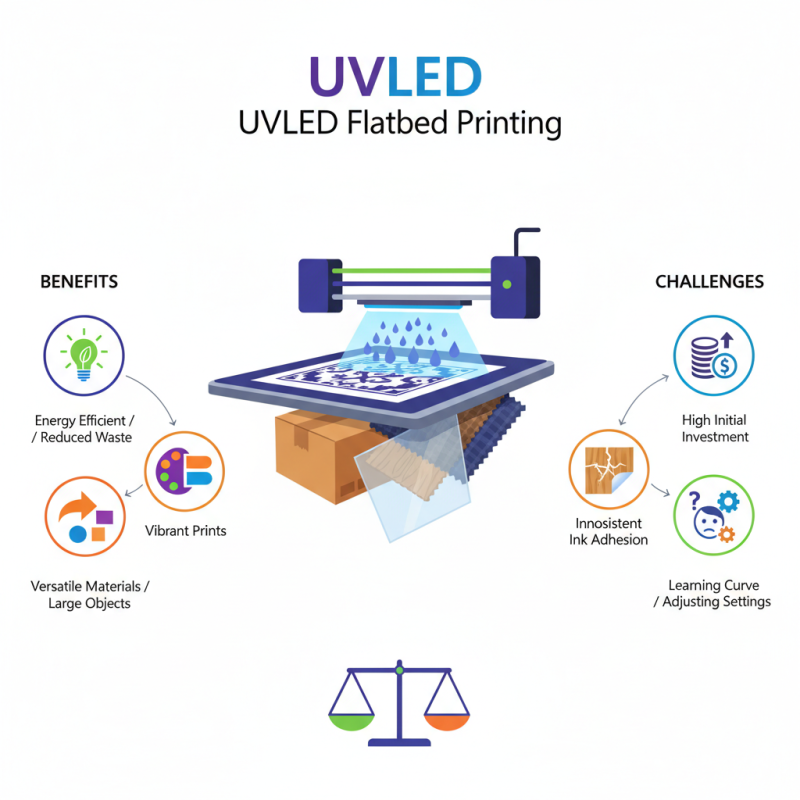
UVLED Flatbed Printing is transforming the printing industry. This innovative technology uses UV light to cure inks instantly. It allows for vibrant prints on various materials. The flatbed design supports large objects, making it versatile.
Many industries benefit from UVLED Flatbed Printing. It's popular in signage, packaging, and décor. The process reduces waste by using energy-efficient methods. Yet, it’s not without flaws. The initial investment can be high for some businesses.
Inconsistent ink adhesion can occur on certain surfaces. Users may face a learning curve when adjusting settings. The benefits often outweigh these challenges, but reflection is essential. Embracing UVLED Flatbed Printing means understanding both its strengths and limitations.
What is UVLED Flatbed Printing? An Overview of Technology
UVLED flatbed printing is a transformative technology in the world of printing. It utilizes ultraviolet light-emitting diodes to cure ink as it’s printed. This allows for quick drying and excellent adhesion to various surfaces. According to industry reports, the global UV printer market was valued at approximately $2 billion in 2020, with a projected compound annual growth rate (CAGR) of 7.6% through 2027. This growth indicates a significant shift towards UV printing in various sectors.
The flatbed design helps in printing directly on rigid substrates, including wood, metal, and glass. This flexibility expands creative possibilities for businesses. However, this technology is not without its challenges. The initial setup costs can be high. Some operators face learning curves with the complexity of UV inks and curing processes. Additionally, the need for regular maintenance of UVLED systems cannot be overlooked. Experts often highlight that while maintenance is crucial, it is often undervalued until operational issues arise.
Furthermore, the sustainability of UVLED flatbed printing is a topic of discussion. While it dries quickly and minimizes waste, the environmental impact of UV inks is still being studied. Many inks contain chemical components that require careful handling and disposal. Balancing efficiency and sustainability remains a concern in the industry.
Key Components of UVLED Flatbed Printers and Their Functions
UVLED flatbed printing utilizes advanced technology for high-quality prints. The key components of these printers play crucial roles in their operation.
At the heart of the printer is the UVLED light source. This component cures the ink instantly upon contact with the substrate. Its precise wavelength ensures vivid colors and sharp details. Next, the print head delivers the ink directly onto the material. It can handle different surfaces, from wood to glass. The positions of these components need to be exact; otherwise, print quality suffers.
Another essential part is the control system. It directs the movements of the print head and adjusts the speed. A poorly calibrated control system can lead to uneven prints. Moreover, the vacuum table holds the substrate in place. It must maintain consistent pressure, or the material may shift during printing. While these components work together, even minor misalignments can affect the final product. Continuous refinement and adjustments are necessary for optimal performance.
What is UVLED Flatbed Printing and How Does It Work? - Key Components of UVLED Flatbed Printers and Their Functions
| Component | Function | Materials Compatible |
| UVLED Light Source | Cures the ink by emitting UV light, allowing for instant drying of prints. | Plastics, metals, glass, wood, and paper. |
| Print Head | Delivers precise ink droplets onto the substrate to create high-resolution images. | Variety of materials as per print head specifications. |
| Control Software | Manages the print settings and operation of the printer, ensuring accurate design reproduction. | Not material-specific. |
| Vacuum Table | Holds the substrate securely in place during the printing process. | Any flat substrates. |
| Ink System | Contains and supplies ink to the print head, with UV-curable inks designed for durability. | Compatible with various media, including rigid and flexible materials. |
The UV Curing Process: Mechanisms and Benefits in Printing
The UV curing process in UVLED flatbed printing is a key technology. It uses ultraviolet light to instantly dry the ink as it is printed. This technique ensures that colors remain vibrant and sharp. The energy delivered by UV light triggers chemical reactions in the ink. As a result, the ink transforms from liquid to solid almost instantly upon exposure.
According to industry reports, the UV printing market is expected to grow by over 10% annually. This growth indicates rising demand for high-quality printing solutions. Benefits include enhancing productivity and reducing material waste. With UV inks, there's no need for solvents that can cause environmental concerns.
However, there are challenges with UV printing. Equipment costs can be high, and maintenance may be complicated. Not all substrates can withstand the intense light. Some may warp or discolor. This fact raises questions about flexibility in printing applications. Manufacturers need to continually improve ink formulations to address these issues while maintaining quality.
Applications of UVLED Flatbed Printing Across Industries
UVLED flatbed printing has gained traction across various industries due to its versatility. This printing method uses ultraviolet light to cure or dry inks on a variety of surfaces. Reports indicate that the UV printing market is expected to grow at a CAGR of 12% from 2021 to 2028. It shows significant promise in sectors like signage, packaging, and decor.
In the signage industry, UVLED flatbed printing offers vibrant colors and durability. Materials such as acrylic, wood, and metal can be printed on directly. This opens doors for custom solutions. Packaging companies benefit, too. They can create eye-catching designs with high resolution. The food and beverage sector has seen a rise in UV printed labels, enhancing shelf appeal. However, some companies still grapple with technology integration.
Additionally, the decor industry has embraced UVLED printing for wallpaper and custom art pieces. It allows designers to experiment with textures and colors with ease. Yet, the learning curve can be steep for traditional printers. Adapting to new technologies often comes with challenges. Some businesses may not fully realize the potential of UVLED. As industries evolve, a willingness to explore this printing method will be crucial.
Comparative Analysis of UVLED Printing and Traditional Methods
UVLED flatbed printing offers unique advantages compared to traditional printing methods. It uses ultraviolet LED light to cure ink instantly. This technology allows for printing on a variety of materials. Common substrates include wood, glass, and metals. The results are often vibrant and durable, appealing for many applications.
However, the technology is not without challenges. Initial setup costs can be higher than conventional printing. Additionally, the learning curve for operators may be steep. Ink formulations may also differ significantly. Traditional methods often use solvent-based inks, which can be more straightforward to handle. In contrast, UV inks require specific equipment adjustments and care.
The environmental impact is another consideration. UVLED printing produces less volatile organic compounds than traditional solvent inks. Still, proper disposal of unused inks and equipment is crucial. Users must weigh the benefits against these factors. Not all applications suit UVLED printing. The decision should consider not just cost, but also functionality and sustainability.