


Why Do Businesses Need a Parcel Sorting System?

A Parcel Sorting System helps businesses move parcels through busy facilities with greater speed and control. It identifies each item, directs it to the right chute or dispatch lane, and reduces repeated manual handling. Picture a conveyor carrying cartons past barcode scanners while operators monitor lanes and clear exceptions. During a seasonal surge, that organized flow can help prevent parcels from piling up near packing stations. Small gains matter.

DHL innovation leader Markus Kückelhaus is known for discussing technology’s role in logistics. I cannot verify a direct quotation from him specifically about parcel sorting, so this is a paraphrase, not a verbatim quote: “Automation creates value when it makes the flow of goods more reliable.” That principle captures why businesses consider sorting systems: they can improve throughput, support accurate routing, and give managers clearer operational data. The benefits depend on good integration, sensible maintenance, and staff who know how to handle exceptions. A scanner can misread a label. A jam can stop a lane. Automation is not magic.

For businesses evaluating a Parcel Sorting System, the practical question is not simply how many parcels it can process per hour. They should also consider parcel size variation, peak volumes, floor space, software compatibility, and service support. A system that fits the real operation may outperform a faster one that does not. The choice deserves careful review.
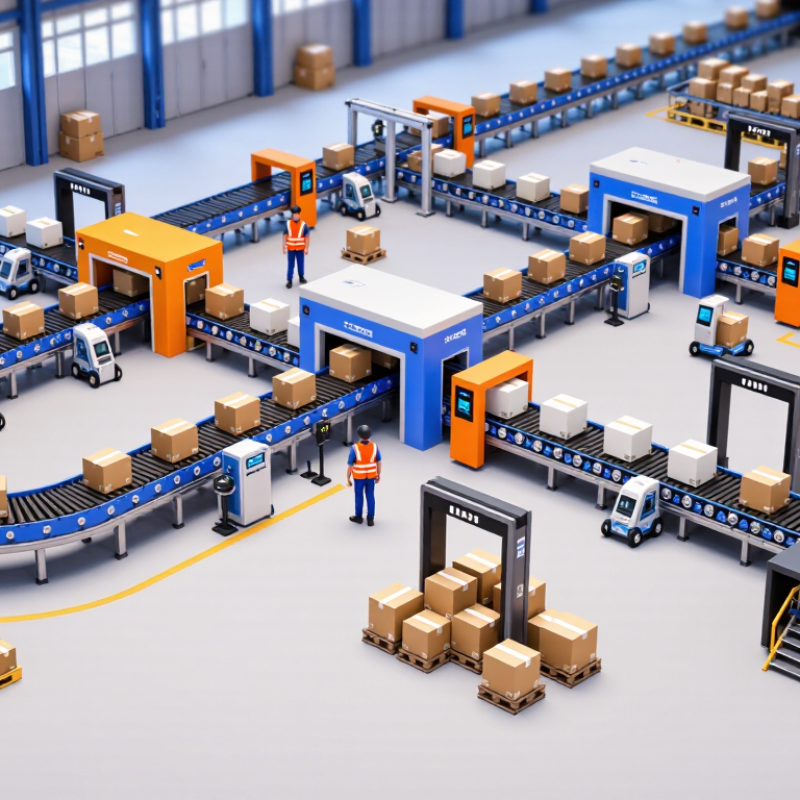
Why Do Businesses Need a Parcel Sorting System?

What a Parcel Sorting System Is

A parcel sorting system is a coordinated set of equipment and software that identifies packages and directs them to the right destination. It may include conveyor belts, barcode scanners, cameras, weighing stations, control software, and mechanical diverters. In a small depot, workers might scan parcels at a waist-high station before placing them on a short conveyor. A larger facility may move thousands of parcels through automated lanes.

The process is practical, not mysterious. A scanner reads a parcel label, and the system matches its delivery information with a route or dispatch lane. A diverter then sends the parcel toward a chute, cage, or loading area. Some systems also record dimensions and weight to support handling decisions. Labels can be creased, wet, or partly covered. That matters. When information cannot be read, the parcel may be sent to a manual review point instead of being routed automatically.

The exact setup depends on parcel volume, package variety, available floor space, and how frequently routes change. A system designed for uniform boxes may struggle with soft mailers or unusually shaped items. Even reliable equipment needs sensible maintenance and clear exception procedures. A jammed belt or poorly positioned scanner can slow the whole flow. Automation helps organize movement, but it does not remove the need for trained staff to monitor results and correct mistakes.

How Parcel Sorting Systems Process Parcels

A parcel sorting system begins when parcels enter a feed line from a receiving area. Staff and conveyors spread items into a steady flow, leaving space between boxes and mailers. A scanner reads each parcel’s barcode, while cameras help identify its position and orientation. Some systems also weigh and measure parcels, adding useful information for handling and routing.

The control software matches each scan to a destination, then signals a belt, diverter, or chute to send the parcel onward. A small carton may slide into one lane; a long box may need careful spacing to avoid blocking nearby items. Not every scan succeeds. Labels can be wrinkled, covered, or turned away from the reader. In those cases, the parcel may move to a manual review point instead of being sent to the wrong destination. That pause matters. Operators can check the label and correct the routing record, though manual checks may slow the line. Even a well-designed system needs regular cleaning, testing, and human attention. A scanner does not fix every problem by itself.

Core Components and Sorting Methods

A parcel sorting system depends on several parts working together. An infeed conveyor brings parcels onto the line, while singulation equipment spaces them apart. A scanner then reads a barcode or shipping label. Control software matches that data to a destination, and diverters guide each parcel toward a chute or dispatch lane. Even a small gap matters.

Sorting methods vary with parcel volume and shape. Barcode-based sorting is common because it links each item to routing data. Some operations also use weight or dimensions to flag parcels that need manual review. Belt, wheel, and sliding-shoe diverters suit different speeds and package types. No method fits every site. Soft mailers and irregular boxes can behave unpredictably, so testing with real parcel samples is important.

Tips: Keep scanner lenses clean and labels visible. Check chute fill levels during busy periods. Track missed reads and recirculated parcels; they often reveal a setup problem. Leave room for manual handling, too. Automation helps, but it does not remove every exception. A sorting line may look efficient on paper and still create awkward bottlenecks near packing or loading.

Operational Benefits for Businesses

A parcel sorting system can turn a crowded dispatch area into a more predictable workflow. Staff scan each parcel, confirm its destination, and guide it to the correct chute or staging lane. This reduces repeated handling and helps prevent parcels from being placed in the wrong vehicle zone. During busy periods, even a few seconds saved per item can ease pressure on the packing team.

The operational value is also visible in staffing and planning. Managers can compare parcel volumes by hour, spot recurring bottlenecks, and schedule workers where queues tend to form. Clearer routing makes handovers between packing, sorting, and loading less dependent on shouted instructions. Fewer touches help. Still, automation is not a cure-all: damaged labels, unusual package shapes, or inaccurate order data may require manual checks. A sorting line also needs suitable floor space, maintenance, and staff training. Businesses should measure current error rates and peak volumes before choosing a system, then review results after installation. The numbers may disappoint at first. That is useful information, not a reason to ignore the process. Small operational adjustments, such as moving a scan point closer to the conveyor, can make the system easier to use each shift.

Why Do Businesses Need a Parcel Sorting System? - Operational Benefits for Businesses

Operational dimension Without a dedicated sorting system With a parcel sorting system Business benefit Useful measure
Parcel throughput Staff identify and route parcels manually, which can create bottlenecks during busy periods. Conveyors, scanners, and automated diverters can route eligible parcels to configured destinations. More consistent processing flow and improved capacity when parcel volumes rise. Parcels processed per hour or per shift
Sorting accuracy Repeated manual handling and visual checks can increase the chance of a parcel being placed in the wrong destination lane. Barcode or label scans can be matched against routing rules, with exceptions directed for review. Fewer avoidable mis-sorts and less rework, depending on label quality and system setup. Mis-sorts per 1,000 parcels
Labor allocation Employees spend more time on repetitive identification, carrying, and lane assignment tasks. Automation handles defined routing steps while staff oversee operations and resolve exceptions. Staff time can be redirected to exception handling, loading, service, and other value-adding work. Labor hours per 1,000 parcels
Dispatch and cutoff management Manual sorting may make it harder to identify late-arriving parcels and complete destination groups before dispatch. Configured destination lanes and operational monitoring help teams track work against dispatch schedules. Improved visibility of dispatch readiness and potential delays. On-time dispatch rate
Tracking and traceability Parcel location and handling events may be recorded inconsistently across manual handoffs. Integrated scanning can create time-stamped handling events and routing records. Faster investigation of exceptions and clearer operational reporting, where scanning is consistently applied. Scan compliance and time to locate an exception
Peak-volume flexibility Handling capacity depends heavily on adding or redeploying staff and available floor space. A system designed with suitable capacity and configurable routes can support changes in volume and destination mix. More predictable planning for seasonal peaks and changing parcel profiles. Peak-to-average volume handled and queue time
Space and handling flow Staging parcels in multiple temporary piles can increase congestion and additional movement. Planned induction points, conveyance, and destination lanes create a more defined movement path. Potentially less unnecessary handling and better-organized use of floor space, subject to facility layout. Parcels moved per handling step and floor area used

Note: Results depend on parcel mix, system capacity, integration, label quality, facility layout, and operating procedures. Track baseline and post-installation measures to assess actual impact.

Factors to Consider When Choosing a System

Choosing a parcel sorting system starts with real shipment data, not a supplier’s headline capacity. Review average and peak parcel volumes, then check package dimensions, weights, and shape. A line rated for thousands of parcels per hour may slow sharply when padded mailers, cartons, and irregular parcels arrive together. Measure busy periods across several weeks. Peak-hour reality matters.

Match the system to your floor plan and workflow. Look at conveyor length, chute locations, loading access, and space for staff to clear exceptions. Where will a damaged label or misread barcode go? A clear manual diversion point can prevent one awkward parcel from stopping an entire line. Small details matter. Test with representative parcels before committing, since clean sample boxes rarely reveal every handling issue.

Integration and operating costs deserve equal attention. Confirm that sorting data can connect with existing order and warehouse systems, and ask how faults are diagnosed. Compare energy use, routine maintenance, spare-part availability, and training needs—not just the purchase price. Ask operators to trial the controls; a technically capable system can still frustrate staff. Some forecasts will be wrong. Leave room for future volume changes, but avoid paying for capacity your facility may never use.

Why Do Businesses Need a Parcel Sorting System?

Factors to Consider When Choosing a System

Planning insight: Rising e-commerce sales can signal growing parcel-handling needs. When evaluating a sorter, compare forecast parcel volume and peak-hour throughput with capacity, available floor space, parcel-size range, integration requirements, and maintenance needs. Sales value is demand context, not a direct measure of parcel count.

Source: U.S. Census Bureau, annual e-commerce sales estimates. Values are rounded and shown in current U.S. dollars (billions).

Packaging machine ROI calculator

Need help figuring out if packaging automation is right for your business?


First, start with the numbers. Download our free packing machine ROI calculator to learn how long it will take for an investment in automation to pay for itself (and much more).


Free packaging automation ROI calculator