


Why Do Buyers Choose Quality Irrigation Parts?
A dry patch at the edge of a field can start with one small failure: a cracked connector, a clogged filter, or a valve that will not close. Irrigation Parts may look interchangeable on a shelf, but their performance shapes water delivery, maintenance time, and crop consistency. Buyers pay attention to quality because weak components can turn routine irrigation into repeated repairs.
The scale of water use makes that choice consequential. The Food and Agriculture Organization reports that agriculture accounts for about 70% of global freshwater withdrawals. The UN World Water Development Report 2021 gives a similar estimate of 72%. These figures do not prove that premium parts always save water. They do show why dependable flow control and leak prevention matter. As FAO Director-General QU Dongyu has put it, “Water is the lifeblood of agriculture and food production.” Quality components help protect that resource at the point of use.
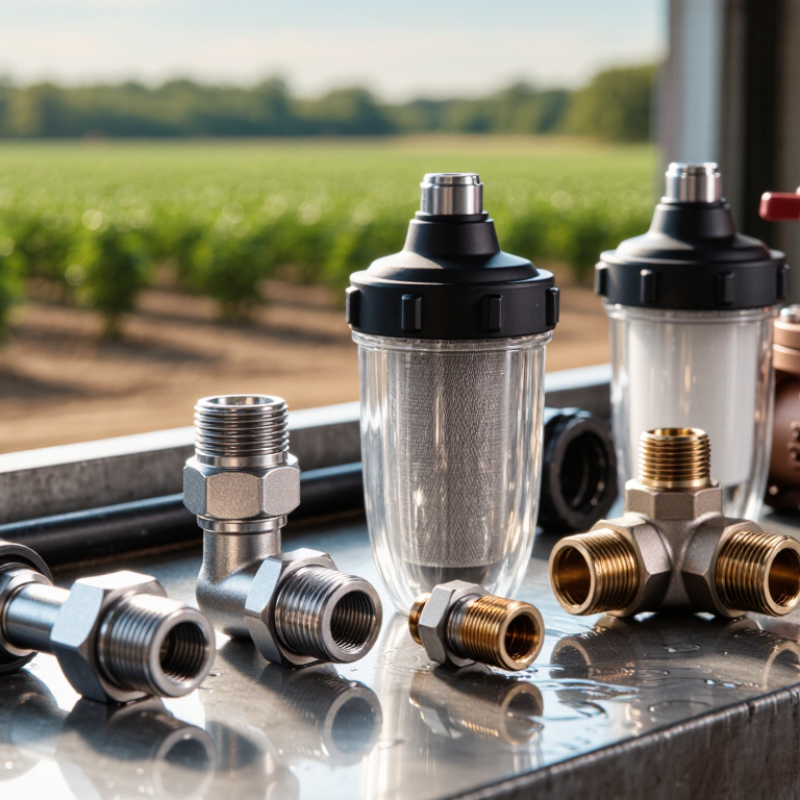
For buyers, quality often means more than a higher price tag. It can mean durable seals, consistent thread fit, corrosion-resistant materials, and clear product specifications. A pump connection should seat cleanly. A filter should be easy to inspect. Small details matter.
Still, quality is not a magic fix. Poor installation, hard water, or neglected maintenance can shorten the life of excellent equipment. Buyers should compare tested performance, warranty terms, and replacement availability—not rely on appearance alone. This guide explores why growers, contractors, and distributors choose dependable Irrigation Parts, and where careful purchasing makes the biggest difference.
What Defines a Quality Irrigation Part: Flow, Pressure, Filtration, and Fit
Why Do Buyers Choose Quality Irrigation Parts?
Quality irrigation parts are defined by performance in the line, not appearance on a shelf. FAO’s AQUASTAT reporting estimates that agriculture accounts for about 70% of global freshwater withdrawals. USDA’s 2018 Irrigation and Water Management Survey recorded nearly 58 million irrigated acres in the United States. These figures make avoidable losses worth checking. Leaks waste water. Uneven flow can leave dry patches beside saturated soil.
A dependable part should deliver its rated flow at the system’s actual operating pressure. Check pressure while water is moving; a gauge reading from a closed line can mislead. Filtration matters, too: select a filter that captures particles relevant to the emitters, without creating unnecessary pressure loss. A clogged screen may look minor, but flow can fall across an entire zone. Fit is equally practical. Match connection size, thread type, seals, and operating range. A component can look right yet seat poorly. That detail is easy to overlook, and it deserves a second check.
Why Water Efficiency Matters: Agriculture Uses About 70% of Global Freshwater (FAO)
Why Do Buyers Choose Quality Irrigation Parts?
Why Water Efficiency Matters: Agriculture Uses About 70% of Global Freshwater
FAO’s AQUASTAT database estimates that agriculture accounts for about 70% of global freshwater withdrawals. Withdrawals are not the same as water consumed, but the figure shows irrigation’s scale. A loose connector can leak unnoticed along a field edge. Clogged emitters can leave dry patches beside saturated soil. Reliable filters, pressure regulators, and seals help deliver water more evenly. Every drop counts.
Quality parts cannot replace sound irrigation scheduling or regular field checks. They can help reduce leaks, pressure swings, and downtime. The UN World Water Development Report 2023 also identifies agriculture as the largest user of freshwater worldwide. Practical checks matter: compare pressure at the pump and at the far end of a line. Inspect joints after startup, when small leaks are easiest to spot. Maintenance is easy to postpone during a busy harvest. That is a real weakness in many systems. Buyers choose dependable parts because consistent flow can protect crops and limit avoidable water loss, season after season.
How Irrigation Supports Food Supply: 20% of Cropland Produces 40% of Food (FAO)
FAO reports that irrigated agriculture produces roughly 40% of the world’s food on about 20% of cultivated land. That imbalance shows why dependable water delivery matters, especially where rainfall is seasonal or unpredictable. A dry spell can stress young roots; uneven pressure can leave one bed wet and another thirsty. Irrigation does not guarantee a harvest, but it gives growers more control over water timing and soil moisture. Water must arrive reliably. Quality parts help sustain that consistency. Filters, valves, and emitters each play a practical role in moving water where crops need it.
Small failures matter. A clogged filter may reduce flow across a field, while a leaking joint can waste water near a pump or row. Regular checks help growers spot these problems before they spread. Durable, compatible components can also make repairs simpler during a busy growing season. Still, the FAO statistic can be oversimplified: irrigation is not suitable everywhere, and more water is not always better. Soil, crop needs, and local water supplies must guide decisions. Good equipment supports careful management; it cannot replace it. A pressure gauge, a clean filter, and consistent inspection may seem ordinary, yet these details help protect both water and food production.
Why Do Buyers Choose Quality Irrigation Parts? — How Irrigation Supports Food Supply: 20% of Cropland Produces 40% of Food (FAO)
| Data Dimension | Documented Data or Technical Consideration | Why It Matters When Choosing Irrigation Parts | Source |
|---|---|---|---|
| Irrigation’s contribution to food production | FAO reports that irrigated agriculture accounts for about 20% of cultivated land and contributes about 40% of the world’s food production. | Because irrigated land supports a substantial share of food production, buyers have reason to prioritize dependable parts that fit the system’s operating requirements. | FAO: Irrigation |
| Agriculture’s share of freshwater withdrawals | Agriculture accounts for approximately 70% of global freshwater withdrawals, according to FAO. | Correctly matched components and well-maintained connections can help operators manage water delivery and address leaks. Actual water savings depend on the full system and its management. | FAO AQUASTAT: Water use |
| Flow and pressure compatibility | Required flow and operating pressure vary by irrigation method, system layout, and component. Check the system design and the component’s published specifications. | Choosing parts within the required operating range helps avoid mismatches that can affect distribution, performance, or component service life. | System design documents and product technical specifications |
| Filtration and emitter protection | Drip and micro-irrigation systems use small water passages; filtration requirements depend on the emitter, water source, and manufacturer’s guidance. | Select filters and emitters as compatible components, and follow specified filtration and cleaning requirements to reduce clogging risk. | Emitter and filter technical specifications |
| Water quality and material suitability | Water chemistry and suspended solids can vary between sources. Material compatibility should be checked against the water conditions and the component’s stated limits. | Suitable materials and seals can help reduce premature deterioration. No single material is the right choice for every water source or operating condition. | Water analysis and component material specifications |
| Connections and replacement fit | Thread type, diameter, connection standard, and seal design must match the existing pipework and equipment. | Verifying dimensions before purchase helps avoid incompatible replacements, installation delays, and the need for unnecessary adapters. | System drawings and fitting specifications |
| Maintenance and parts availability | Inspection and maintenance needs differ by system, water quality, and operating conditions. Follow the equipment maker’s maintenance instructions. | Buyers can compare parts by serviceability, replaceable seals or components, and the availability of suitable spares for their system. | Equipment maintenance instructions and spare-parts documentation |
Note: The FAO figures are global estimates. Irrigation’s share of cultivated land and food production, as well as water use and component requirements, varies by region, crop, and irrigation system.
Why Reliable Components Matter in the U.S.: Irrigation Uses 118 Bgal/Day (USGS, 2015)
The USGS estimated that irrigation withdrawals in the United States averaged about 118 billion gallons per day in 2015. That figure shows the scale of water moving through farms, not the needs of every field or system. Conditions vary widely. Soil, crop type, weather, and equipment all affect demand.
At that scale, a small component failure can waste water and interrupt a carefully timed watering cycle. A cracked fitting may leave a muddy patch beside a dry row. A clogged filter can reduce flow across an entire line. Reliable valves, filters, emitters, and connectors help maintain steady delivery and make problems easier to spot. They do not eliminate maintenance. They can make it more predictable.
Buyers should match parts to operating pressure, water quality, and the system’s layout. Check seals and connections before peak watering periods, and keep compatible replacements nearby. It is tempting to choose by purchase price alone. That can be shortsighted, though a higher price does not guarantee longer service. The 2015 USGS estimate is useful context, but it is not a current measure of every farm’s use. Local inspection and operating records offer a more practical basis for choosing components.
How Buyers Assess Long-Term Value: Service Life, Repairability, and Leak Control
Why Do Buyers Choose Quality Irrigation Parts?
How Buyers Assess Long-Term Value: Service Life, Repairability, and Leak Control
Buyers assessing long-term value look beyond purchase price. A fitting may cost little, yet replacement labor and crop stress add up. Service life depends on actual conditions: water chemistry, pressure swings, UV exposure, and seasonal storage. Check material specifications and pressure ratings against the system’s operating range. A rating alone is not a promise. Poor installation can shorten service life.
Repairability matters when a line is wet and access is awkward. Replaceable seals, standard connections, and clear disassembly steps can reduce downtime. Keep compatible seals on hand. That matters. Leak control deserves equal attention. Look for even threads and fittings that seat without excessive force. After installation, run the zone at working pressure and check joints with a dry cloth; a faint damp ring may reveal a slow leak. Even careful buyers can misjudge repair access. Durable materials do not automatically make a part easy to service. Nor can every leak be prevented, especially after freezing or accidental impact. Record repair dates and locations; recurring seepage near one joint may point to pressure or alignment issues.


