Why Choose a Hot Stamping Plate?
Packaging buyers notice the small details: a clean metallic line, a sharp logo, or a foil accent that catches light on a shelf. A Hot Stamping Plate helps transfer those details with controlled heat and pressure. The result depends on more than appearance. Plate material, engraving depth, substrate, foil, and machine settings all affect edge definition and consistency.
Industry forecasts offer useful context, but they do not guarantee demand for any single finish. Smithers’ report, The Future of Global Packaging to 2024, projected the global packaging market would exceed $1 trillion in 2024. That broad forecast points to packaging’s commercial scale, not a specific growth rate for hot stamping. Grand View Research’s Packaging Printing Market report also tracks changing demand for printed packaging and finishing options. These sources help explain why converters assess decoration alongside cost, throughput, and material performance.
A plate is a production tool, not a shortcut to premium quality. On a carton sample, a fine serif may fill in if pressure is too high; a wide foil area may show uneven transfer if the die or substrate is poorly matched. Small tests matter. Still, shine is not strategy. Before choosing a Hot Stamping Plate, teams should compare artwork, run settings, wear expectations, and repeatability on the actual stock. Results vary. Careful trials reveal whether the finish earns its place on the final package.
What Is a Hot Stamping Plate?
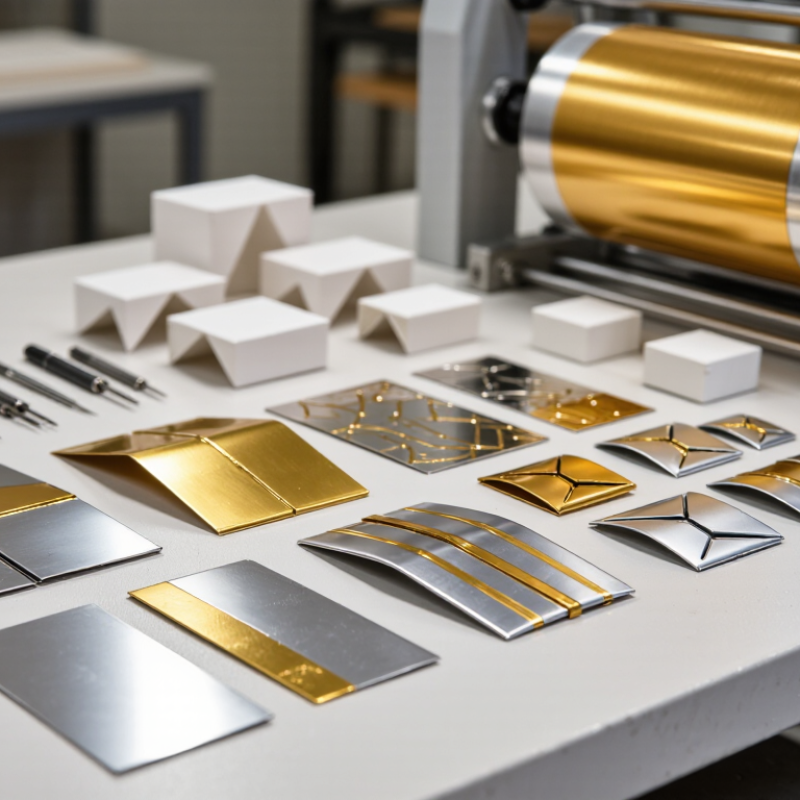
A hot stamping plate is a shaped metal tool that applies heat and pressure to a surface. It carries a design, such as fine lettering, a border, or a small emblem. During production, the plate is heated and pressed against foil and the material beneath it. The foil’s coating releases where the raised design makes contact, leaving a bright or matte impression. The plate is not the foil itself; it is the working surface that forms the image.
Plates are commonly made from brass, magnesium, copper, or steel. The right material depends on the design detail, number of impressions, and substrate. Brass can hold crisp detail for longer runs, while softer metals may suit shorter jobs. No plate fixes a poor setup.
Temperature, pressure, dwell time, and material all affect the result. Too much heat can blur edges; too little may leave gaps. Even the paper’s texture matters.
A test impression on the actual stock is useful, though it adds time and can reveal awkward adjustments. That part is easy to underestimate. A well-made plate is precise, but the operator still needs to balance the process.
How Does a Hot Stamping Plate Transfer Designs?
Why Choose a Hot Stamping Plate?
How Does a Hot Stamping Plate Transfer Designs?
A hot stamping plate carries a design in raised or engraved areas. During production, the plate heats and presses a foil against the surface below. Heat softens the foil’s release layer, while pressure helps its decorative layer bond to the material. When the plate lifts, foil remains only where the design contacted the surface. That is the basic action. Clean transfer depends on matching plate temperature, pressure, and contact time to the foil and substrate. Paper, coated board, and some plastics may respond differently.
Tips: Test a small sample before a full run. Check that the plate is evenly heated, and look closely at fine lines and corners. A result can seem acceptable from a distance but show weak edges up close.
If the impression looks patchy, increasing heat is not always the answer. Excessive heat or pressure can blur details, mark the substrate, or distort the foil. Adjust one setting at a time and record the result. Plate condition matters, too: residue or wear can interrupt contact and leave gaps. There is some judgment involved, and a test may need repeating. Careful setup helps produce sharper, more consistent designs.
What Materials and Features Define Its Performance?
A hot stamping plate is more than a heated surface. Its material and geometry affect how cleanly foil transfers onto paper, leather, or coated board. Brass is often chosen for detailed work because it combines good heat transfer with fine engraving. Magnesium can be lighter and quicker to machine, but may wear sooner in demanding production. Steel suits long runs, though it can take more time and effort to prepare.
Harder is not always better. The right choice depends on the material being stamped, the design, and the expected run length. Small details matter. A flat, evenly machined face helps distribute pressure across the image. Consistent plate thickness supports stable contact, while suitable relief depth helps prevent unwanted marks around fine lines. Temperature control, press pressure, and dwell time also shape the result; even a well-made plate cannot correct poor setup. Check the first impressions under normal lighting, especially around small text and sharp corners. There is no perfect plate for every job, and testing a sample can reveal trade-offs that specifications alone may miss.
Why Choose a Hot Stamping Plate?
Thermal conductivity affects how quickly and evenly heat can spread through a plate. The chart compares approximate room-temperature values for representative metals; actual values vary with alloy, grade, and temper.
Copper and aluminum conduct heat more readily than steel, which can help distribute heat efficiently. Material choice also depends on hardness, dimensional stability, operating temperature, surface finish, and compatibility with the stamping process.
Approximate thermal conductivity at room temperature, in watts per meter-kelvin (W/m·K). Representative reference values; specific plate alloys may differ.
What Advantages Does Hot Stamping Offer?
Hot stamping creates a bright, clean accent by pressing heated foil onto a prepared surface. It can add metallic shine, matte color, or subtle texture without leaving a wet layer of ink. On a paper carton, a small gold line catches the light as the package turns. The effect feels precise.
A well-made hot stamping plate helps transfer artwork consistently across repeated impressions. Fine borders and compact lettering can look crisp when the plate, pressure, temperature, and dwell time suit the material. Foil also creates contrast: a reflective mark beside an uncoated area stands out on a crowded shelf. Used sparingly, it can suggest quality without covering the whole surface.
There are trade-offs. The plate requires setup, and very fine details may fill in on textured or absorbent stock. A practical check is to inspect a sample under real lighting and rub it gently after cooling. A polished proof alone may not reveal every issue. Not every job needs foil, but it can bring focused visual impact with little added surface coverage.
How Do You Choose a Plate for Your Application?
Why Choose a Hot Stamping Plate? How Do You Choose a Plate for Your Application?
Start with the material being stamped, the design detail, and the expected run length. A fine logo on coated paper needs a different plate from a broad foil panel on textured board. Brass is durable and holds fine detail well during longer runs. Magnesium is lighter and often suits shorter runs, while copper can offer a useful balance of detail and durability. Check plate thickness and mounting against your press, too. A mismatch can cause uneven pressure or soft edges. Small details matter.
Smithers’ report The Future of Global Packaging to 2028 projected the global packaging market would reach about $1.2 trillion by 2028. That growth makes consistent shelf presentation valuable, but it does not mean every job needs the most expensive plate. Match plate material to substrate, foil, image coverage, and machine temperature. Then confirm the supplier’s recommended heat and pressure with a press trial. In practice, teams sometimes focus too much on plate price. I’ve seen setup and wasted stock matter more.
Tips: Ask for a sample impression on your actual stock. Check fine lines, solid areas, and foil release under production conditions. Test before ordering. Record the temperature, pressure, and dwell time that worked; those settings may need adjustment when the stock or foil changes.